
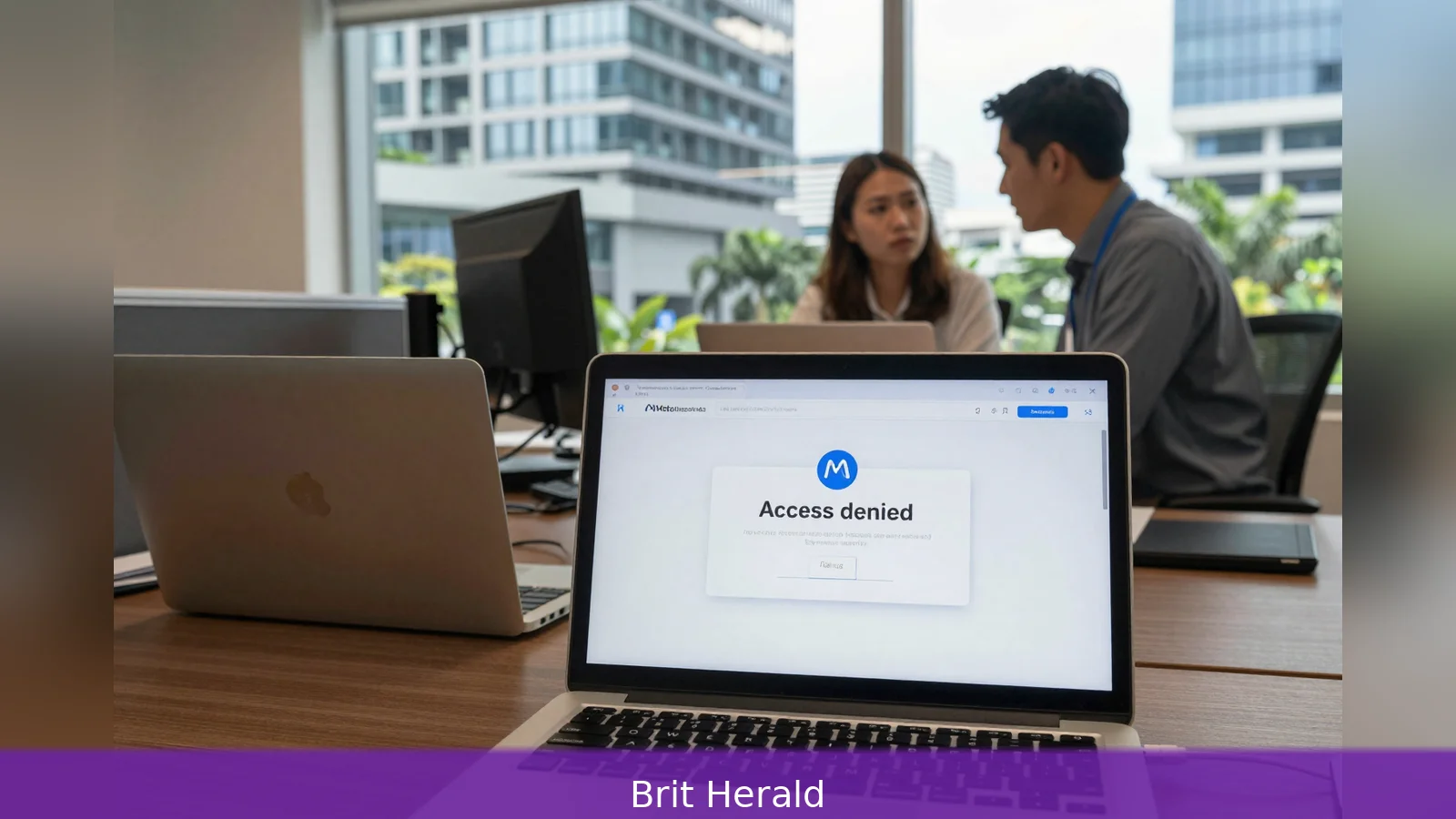
Inside Meta’s Menlo Park offices this week, staff were told to stop using tools built by Manus as the company began dismantling its $2 billion acquisition after Beijing ordered a reversal. The change marks the first operational step in a forced divestiture ordered by China’s National Development and Reform Commission, which said the transaction posed national security and technology export control risks. Manus employees in Singapore found their access to Meta systems cut off as Meta directed teams to migrate existing Manus projects onto Meta platforms rather than start new work on the startup’s tools. The next formal milestone is a regulatory timetable that expands review powers and takes effect in July, a development that will shape how this unwind and other deals in strategic AI sectors proceed.
On the floor of Manus’s Singapore campus this month, employees discovered they could no longer reach Meta’s internal systems, a practical sign that an orderly integration had given way to separation.
Operational split and the memo that said "sunset"
The cut-off began at the start of June, Bloomberg reported, after an internal directive at Meta instructed staff to stop using tools built by Manus and to move existing projects off the startup’s platform. An internal memo reviewed by Bloomberg described Manus as being "sunset" and told teams to migrate work onto Meta systems rather than begin new work on Manus’s infrastructure. Meta also barred its own teams from using Manus-developed tools for internal projects, the reporting said, a move that turns a paper reversal into day-to-day changes for engineers and product managers.
That halt to data sharing and the operational split are the most concrete steps taken since Chinese authorities ordered a reversal of the deal in April. China’s National Development and Reform Commission issued the demand for divestiture, citing concerns about the transfer of strategically sensitive technology and talent to a US company, according to the public notices and reporting that followed.
The unwind is visible in both centres of gravity for the deal. Manus was acquired by Meta in December 2025 for about $2 billion after the startup relocated its headquarters and core teams to Singapore in mid-2025. The company had attracted global attention earlier with a viral agent demonstration. Even as Meta withdraws operational access, Manus continued to publish product updates in June, according to company activity that month.
The practical difficulty for Meta is that the company had already begun to fold Manus technology and personnel into its broader AI strategy.

That integration makes an undoing both technical and organisational: code bases must be separated, data flows severed, and staff reassigned or repatriated.
Commentators cited by CNBC and Bloomberg described the case as a precedent for how China will now treat cross-border deals in strategic sectors. Matthias Hendrichs, a Singapore-based adviser to global AI firms, said Chinese-origin AI now carries a kind of reversibility risk that no clever deal structure can price out. Han Shen Lin, China managing director at The Asia Group, added that the unwind may be messy. Those judgements reflect a wider concern among advisers and lawyers that the reversal is rare under China’s foreign investment security review mechanism, and that it will complicate future cross-border M&A in AI.
Founders of Manus have begun preliminary discussions about raising roughly $1 billion from outside investors to buy the startup back from Meta, according to reporting in May. That route would, in theory, re-establish Chinese control and create options such as a joint venture or an eventual Hong Kong listing. Investors who sold in the Meta deal have largely been paid out. The Wall Street Journal reported that US venture firm Benchmark and other backers received proceeds, while Asian investors including Tencent, HSG and ZhenFund signalled they would cooperate with the unwind.
Beyond the single transaction there are immediate policy consequences. Regulators in Beijing have tightened controls on outbound travel for researchers and executives and expanded scrutiny of inbound foreign capital and overseas transactions in sensitive technologies. Legal advisers told reporters that the reversal represents a new lever inside China’s review apparatus and that its use will shape corporate strategy for years to come.
That regulatory tightening has a calendar. Reuters reported that new rules broadening Chinese authorities’ powers to review, block or reverse overseas transactions are scheduled to take effect in July. The July measures set the next formal milestone for how the Meta-Manus unwind proceeds and how other deals in strategic technology sectors will be treated.
For Meta, the immediate task is operational: to disentangle systems and to decide what to do with code, people and intellectual property that had been migrating into its product roadmap. For Manus, the challenge is to find a buyer or backers willing to pay to reassemble the company in a way that satisfies Beijing’s concerns while preserving the team and technology that attracted Meta in the first place.
The episode also signals to global investors that a closing announcement is no longer an absolute end point where ownership and control are beyond politics. The reversibility risk now documented by advisers means dealmakers will need new contractual and political strategies when Chinese-origin technology and talent figure in cross-border transactions.
Related Articles
- Anthropic CEO has one direct report, sister runs operations
- Chesky backs Airbnb AI lab despite doubts over LLMs
- Anthropic takes Claude Fable 5 offline after US export order
The formal next step is the July regulatory timetable, when rules that broaden Beijing’s review and reversal powers come into effect, a deadline that will shape both the Meta-Manus separation and the future appetite for outbound deals involving strategic AI assets. Originally reported by techcrunch.com.
This article was created with AI assistance.


