
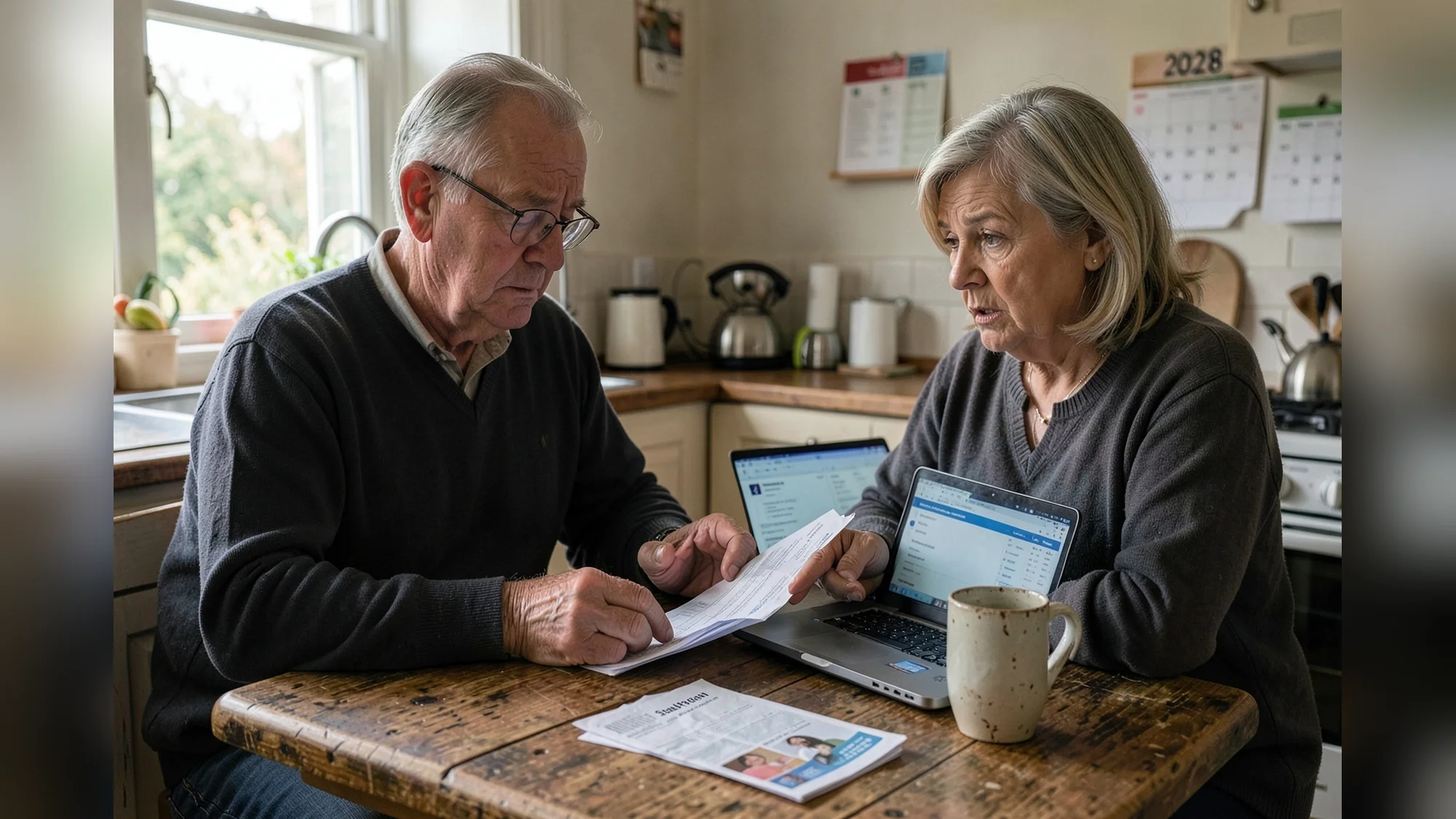
£600 million a year is the estimated cost of temporarily lifting Universal Credit for 66-year-olds, the cross-party Work and Pensions Committee said in a report published on 11 July 2026. The committee proposed the measure to blunt a steep income cliff that opens as State Pension age rises, arguing it would protect people forced to wait longer for Pension Credit. The recommendation would target those who reach 66 while awaiting the State Pension, and the committee urged the Government to consult on implementing an interim uplift by the end of 2026. This rise to age 67 is on the current timetable and will complete by April 2028.
£600 million a year would be a small, temporary price to pay next to the larger fiscal shift the committee highlights. The Work and Pensions Committee frames that sum as a short-term intervention against an expected £10.5 billion in savings from raising the State Pension age, a trade-off it says should be used to prevent avoidable poverty among older households.
How the gap opens
The committee set out the mechanics. Under the current timetable the State Pension age will reach 67 by April 2028, meaning growing numbers of people will be in the year before State Pension age for longer than previous cohorts. Claimants in that year can only get the standard Universal Credit rate, currently £425 a month, until they reach State Pension age. Pension Credit, which the committee says guarantees about £1,031 a month, is payable only once someone reaches the State Pension age, creating a sharp income cliff for those in the gap.
The committee pointed to the last rise in 2020 as a precedent. Measured poverty among people in the year before State Pension age climbed to 24 percent when the last change took effect, up from 10 percent beforehand. The report uses that historical move to argue the current increase will have at least as great an impact, because many of those approaching State Pension age now have worse health and a reduced capacity to extend working lives.
About 42 percent of 66-year-olds are in paid work, the committee noted, and almost a quarter of the poorest 60-65 year-olds are working while frail. That pattern, it argues, worsens health problems and drives later-life poverty. Raising Universal Credit at age 66 would shorten the time lower-income claimants must subsist on £425 a month before becoming eligible for Pension Credit.

The committee judged that the potential weakening of work incentives from a temporary uplift is outweighed by the need to reduce poverty among people approaching pension age.
It also criticised the Government for relying on impact assessments carried out in 2011 and 2013, saying those evaluations haven't been updated and so leave "a big gap in the Government’s understanding" of how people will be affected.
That criticism lands against recent activity at the Department for Work and Pensions. On 9 July 2026 the DWP published an evaluation strategy for the Pension Schemes Act 2026, which sets out how the department and partner regulators will track whether the Act’s measures meet their objectives. The DWP said it will work with The Pensions Regulator, the Financial Conduct Authority and HM Treasury to map logic models, headline metrics and detailed evaluation questions across items such as small pots, guided retirement, defined contribution megafunds and defined benefit superfunds.
The committee argued the Government missed an earlier chance to update impact analysis and to inform mitigations before the current State Pension age rise. Its recommendation is narrowly targeted: a consultation on increasing Universal Credit at age 66, implemented as an interim measure while longer-term support is developed.
The political choice is clear. Spending an estimated £600 million a year would cushion households against an immediate loss of income and reduce the health harms associated with working while frail. On the other hand, the committee accepts the State Pension age rise delivers large fiscal savings, and frames its proposal as time-limited, designed to sit alongside a refreshed analytical base and longer-term reforms.
Related Articles
- State pension 4.8% rise pushes more retirees into tax net
- Two guides, one decision: how DWP advice must be applied
- Pension Credit UK eligibility 2026
The committee has asked the Government to consult on a temporary Universal Credit uplift for 66-year-olds, with a view to implementation by the end of 2026. The State Pension age rise reaches 67 by April 2028. Originally reported by committees.parliament.uk.
This article was created with AI assistance.


