
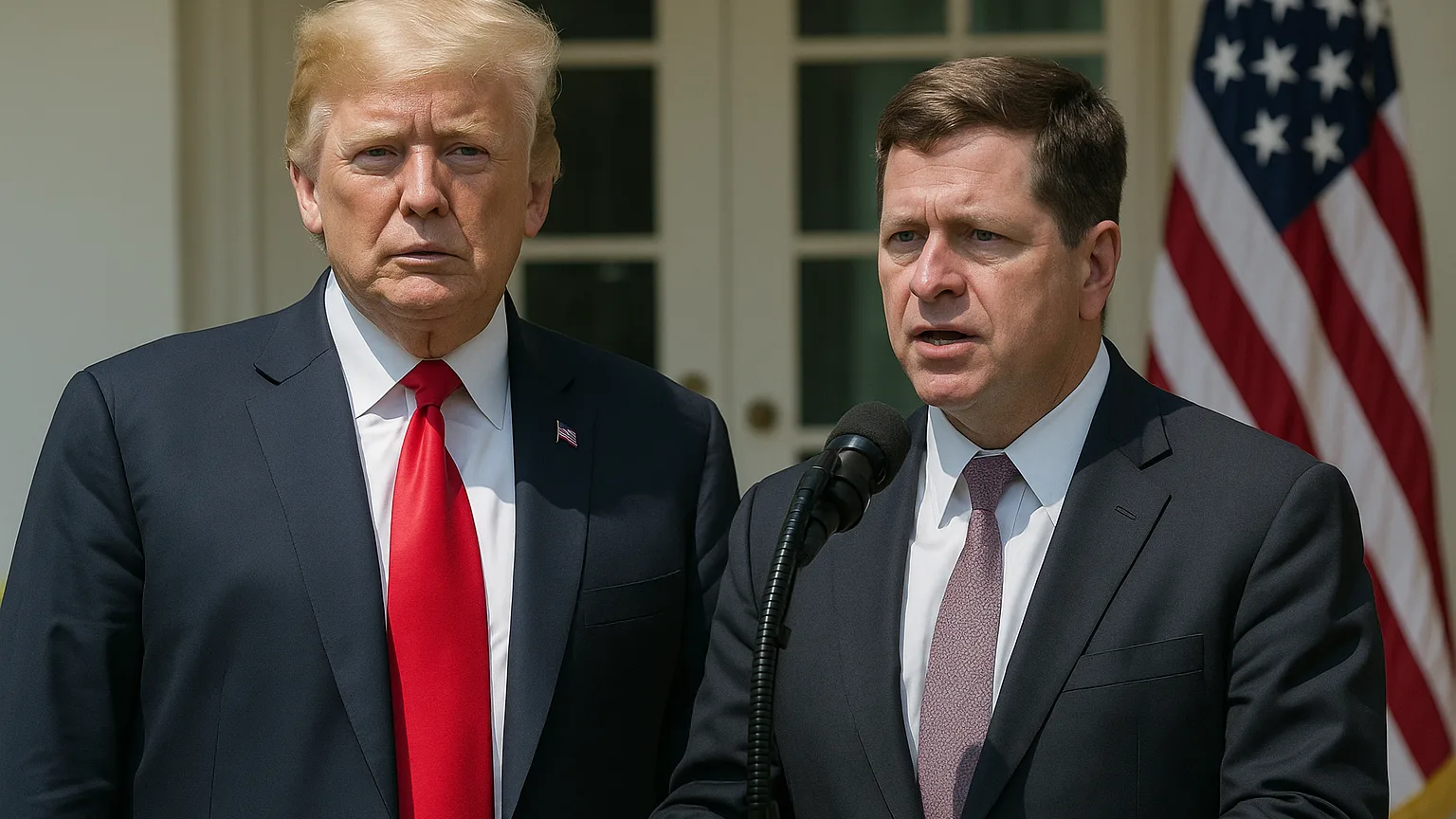
President Donald Trump has tapped Director of National Intelligence Jay Clayton to head a 120-day Super Intelligence Force to assess AI risks and recommend the federal role, while the administration seeks to shift government usage of the term "super intelligence".
Clayton’s appointment and the task force brief
The White House has folded its AI review into the national-security apparatus by naming Director of National Intelligence Jay Clayton to lead a new Super Intelligence Force while he retains his DNI duties. The administration has tasked the group with a 120-day review to assess AI risks and opportunities and to recommend the federal government’s role in coordination and incident response.
Politico said Clayton will assume the newly created role (described there as an artificial intelligence czar) while continuing to oversee the U.S. intelligence community, and that the force will report to the president and White House chief of staff Susie Wiles. Clayton told The Independent the task force has 120 days to produce a report assessing risks and should recommend how agencies should coordinate and strengthen incident-response capabilities for breaches, hacks and other incidents. That 120-day timetable and the mandate to review reporting mechanisms are the administration’s stated, immediate responsibilities for the group.
The White House named other officials to the force alongside Clayton, including Federal Trade Commission Chair Andrew Ferguson, the Pentagon’s chief technology officer Emil Michael and Office of Personnel Management Director Scott Kupor. The announcement says the group will engage consumers, public-interest and religious organisations, critical-infrastructure providers and AI companies. The order sets those tasks as the force’s remit; it did not create statutory regulatory powers or fix the organisation’s status beyond the 120-day review.
A federal terminology change, not a settled technical definition
The executive order and related guidance require federal agencies and diplomats to use “super intelligence” or “SI” in official communications, and the State Department has instructed diplomats to adopt the term in official contexts, according to The Hill. The administration has also circulated a voluntary pledge aimed at rebranding “artificial intelligence” as “super intelligence” within government communications.

That instruction changes government usage; it does not establish a settled technical definition across industry. In technical literature, “superintelligence” commonly denotes a hypothetical future system that surpasses human cognitive performance across virtually all tasks. Using “super intelligence” or “SI” in routine government language risks conflating present-day AI systems with that narrower, hypothetical concept. The White House move therefore alters the word the U.S. government asks its agencies and diplomats to use; it does not by itself create a new technical category recognised by the broader AI research or commercial communities.
Why the move matters for policy, markets and governance
The appointment and the 120-day review signal the administration’s attempt to preserve U.S. leadership in AI development while addressing safety, security and oversight concerns. The White House framed the force as a mechanism to coordinate federal engagement with a wide set of stakeholders and to strengthen incident-response under existing authorities. Those are the concrete policy tasks the team has been asked to perform.
For markets and companies, the most immediate effects will likely be behavioural rather than legal. A high-profile federal label and a White House-backed review can shift expectations about future oversight and may prompt firms to revisit compliance, risk-management and engagement strategies with government. Those reactions would reflect perceived political direction rather than binding rules; the announcements did not include any new statutory regulations.
The task force’s remit to examine reporting mechanisms for breaches and to recommend strengthened federal-response capabilities points to a near-term emphasis on incident reporting and coordination rather than sweeping new limits on technology development. How firms, investors and foreign competitors interpret that emphasis will shape corporate decisions, but the statements issued so far stop short of prescribing specific regulatory outcomes.
The wider political and industry context
The Super Intelligence Force forms part of a wider White House campaign to popularise the “super intelligence” label. The administration convened leaders of major AI companies at the White House and secured a voluntary accord from executives; the pledge and related guidance are intended to embed the new terminology and to encourage self-imposed controls by developers. The administration has made clear a preference for preserving U.S. innovation and leadership in AI while signalling attention to safety and national-security risks.
Industry and expert reactions are mixed on whether the new label will stick. Some technology executives signed the White House’s non-binding pledge and used the term in that forum; other commentators noted stumbles in the rollout and warned the rebrand could blur important technical distinctions. Those responses underline the difference between an official federal label and common usage within research and commercial communities.
The next named administrative milestone is the task force’s 120-day report, which the White House has tasked Clayton and his colleagues to deliver. The force’s findings and any recommendations on government coordination, incident response or further action are the principal near-term developments to watch.
This article was created with AI assistance.


