
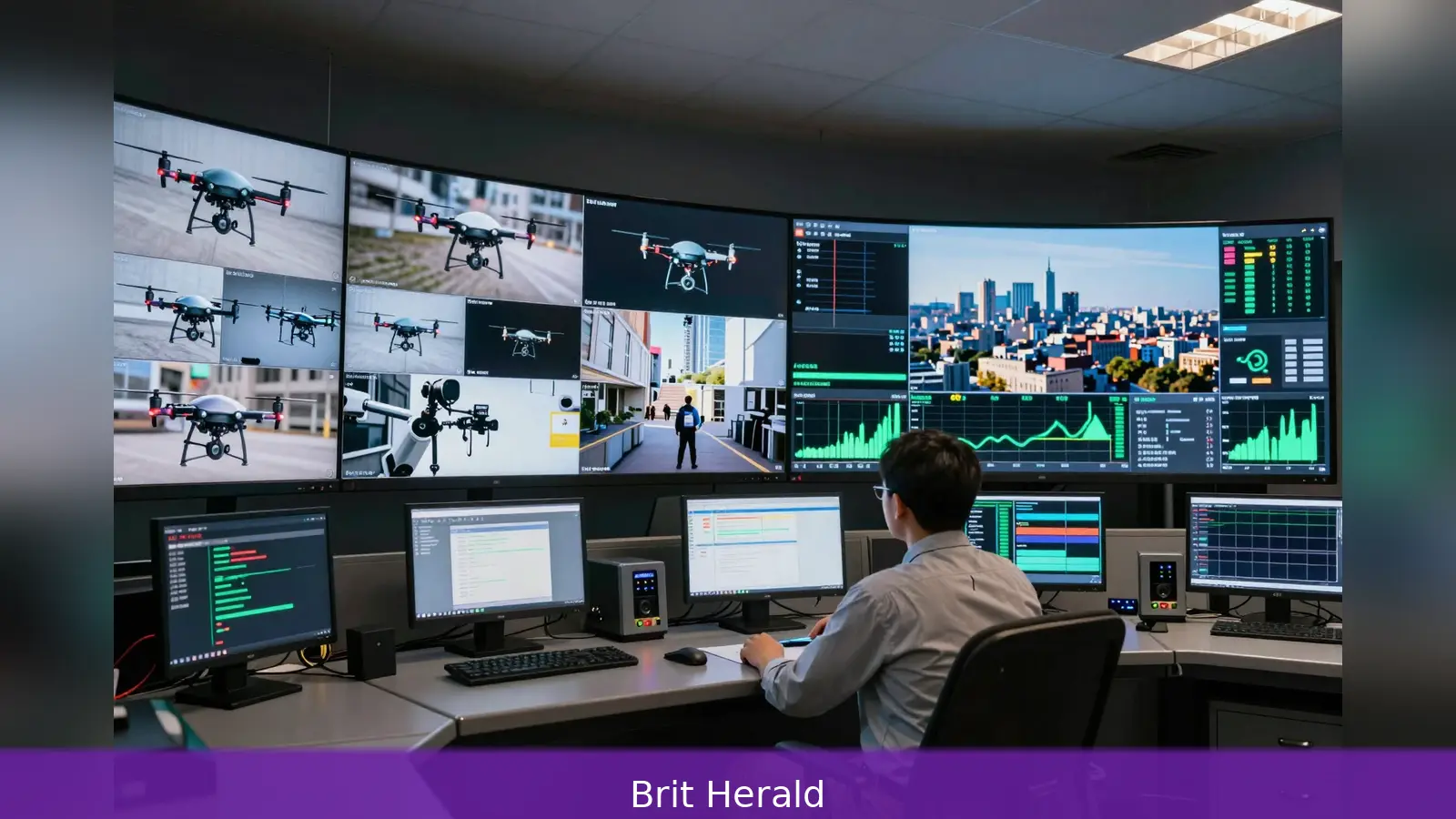
Kyber has built an SDK that synchronises video, audio, sensor data and control inputs in real time. Operators could control far larger fleets with millisecond responsiveness, the Paris-based startup says. Led by Jean-Baptiste Kempf, the lead developer of VLC Media Player, Kyber pairs an open-source core with a commercial offering and has raised a $5 million seed round led by Lightspeed to fund product development and early sales. There is no public rollout schedule or pricing yet, the company says.
Faster, more reliable feedback will let organisations scale remote operations because Kyber prioritises the millisecond-scale responsiveness that matters for real-world control, according to Jean-Baptiste Kempf. The platform is designed to keep the operator, the compute and the action in sync by tuning streaming and compute to each device.
From VLC to robots
Kempf brings a clear technical lineage to the problem. He was the lead developer of VLC Media Player, and says the techniques that improved playback map naturally from smooth video to remote-device control. "If you control things in the real world, every millisecond matters," he said.
The company combines streaming optimisations with device-side tuning so that performance adapts to a device's available compute. That architecture aims to synchronise not only video and audio but also sensor streams and control inputs, a set of requirements that go beyond consumer video players and into the demands of teleoperation and observability.
Kyber's engineering focus is practical rather than theoretical. The open-source core gives developers a starting point, while the firm offers commercial support for customers that need hands-on integration. The public facts released so far are straightforward: an open-source SDK, a Paris base and the fresh funding.
Kyber positions remote control and observability as two sides of the same problem. Operators need low-latency audiovisual and sensor feeds for direct teleoperation, while both human operators and automated systems need surface-level observability to confirm that systems are functioning when they run at scale.

Kempf says routine benefits include pushing software updates without physically touching devices, and anticipated deployments could range from a handful of machines to very large networks.
The ambition contrasts with the reality of most commercial fleets today. Kempf noted that current large fleets remain relatively small, and firms that have the resources often build bespoke stacks for narrow use cases such as remote driving. Those in-house systems, he argues, are not designed to operate at the multi-million-device scale Kyber talks about.
Lightspeed framed the work as infrastructure for physical AI. In a LinkedIn post, the investor said, "Physical AI is only as good as the underlying systems running it." Lightspeed led Kyber's $5 million seed round, which will underwrite product work and early enterprise sales.
Kyber's target customers include companies already building remote-control stacks at smaller scale and organisations working on autonomous fleets. For both groups the gating factors are synchronised sensor and control streams and scale-aware observability. The startup pitches itself as a developer-facing SDK that also functions as a platform for customers that require custom integration and support.
The company's small team emphasises its early-stage capability rather than a fully mature operation. That combination of open-source tooling and a commercial offering is consistent with Kempf's past work: an established developer ecosystem coupled with services for larger customers.
Practically, Kyber's approach means allocating latency budget where it matters and adapting quality to device capability. That can be both a software exercise in reducing buffer and transport delays and a systems exercise in placing compute to shorten control loops. The brief connects these choices directly to Kempf's experience improving streaming performance and responsiveness.
For customers, the pitch is operational: fewer physical interventions, closer alignment between what operators see and what machines do, and a path to expand fleet size without proportionate increases in human oversight. For investors, the pitch is infrastructural: build the plumbing that lets physical AI scale, and the application market will follow.
Related Articles
- Crypto Clipper steals wallets yet installs a backdoor
- Rumble gains 22,400 Nvidia GPUs, targets cloud revenue
- SpaceX overtakes Amazon, valued at $2.78tn
The next test is commercial traction. Availability and pricing remain unpublished; product deployments will determine whether Kyber's approach can scale.
This article was created with AI assistance.


