
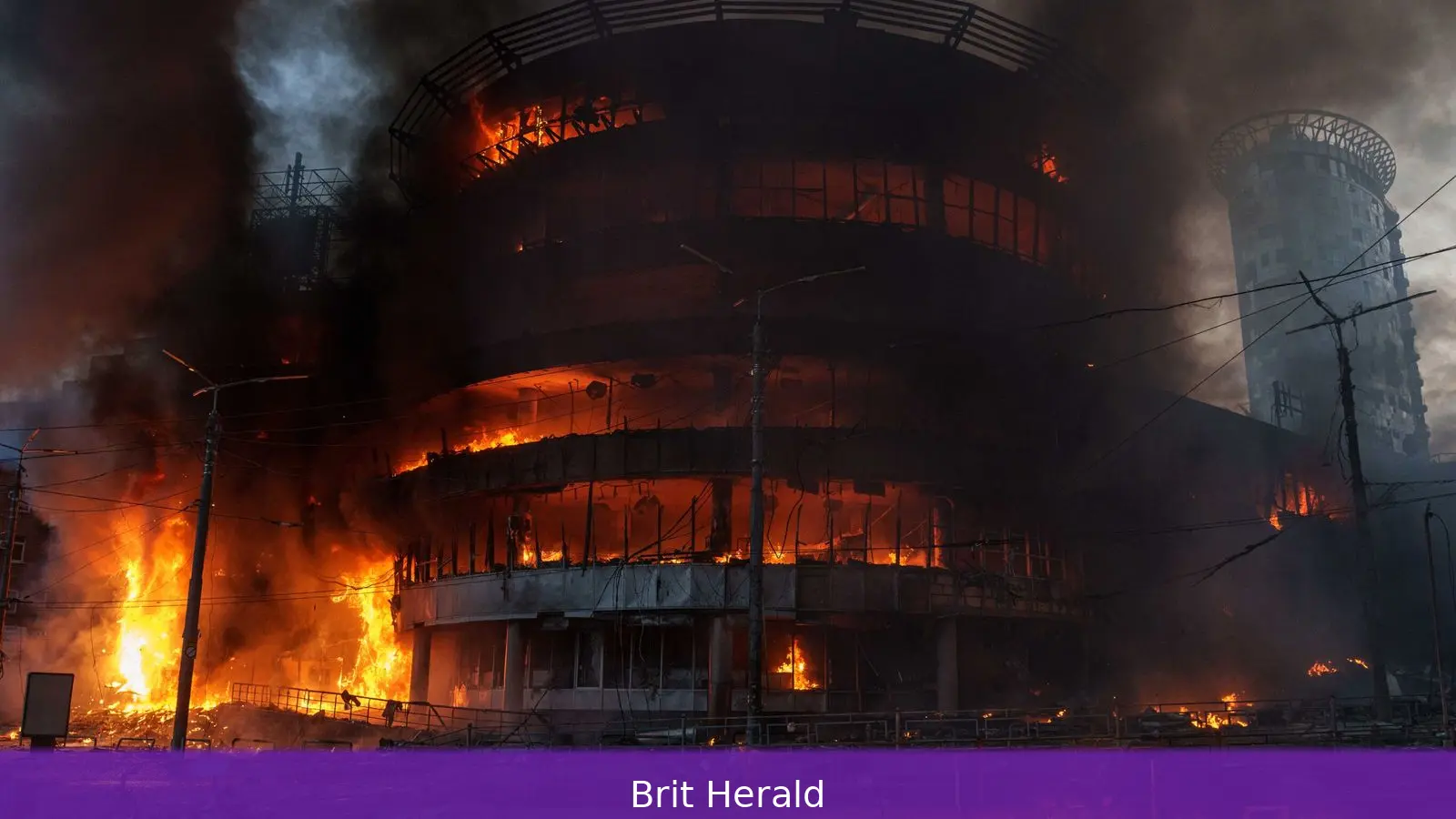
600 drones and 90 missiles were used in a large overnight strike on Kyiv, Ukrainian officials said, in an assault that killed at least four people and wounded 83. President Volodymyr Zelenskyy said the attack included an intermediate-range Oreshnik hypersonic missile and that US and Western intelligence had warned the weapon might be deployed. Kyiv mayor Vitali Klitschko and the Kyiv regional governor reported two fatalities in the capital and two more in surrounding districts, while local officials recorded damage at roughly 40 locations. Authorities said rescue and damage assessments are under way and that Kyiv and Western services will continue to examine the use and implications of the Oreshnik missile.
The overnight barrage on Kyiv was unusually large both in scale and in the mix of weapons used, Ukrainian officials said. President Volodymyr Zelenskyy described the assault as including the Oreshnik intermediate-range hypersonic missile and said about 600 drones and 90 missiles were deployed. He added that at least 83 people had been injured.
Mayor Vitali Klitschko and the Kyiv regional governor reported two fatalities inside the capital and two more in surrounding areas. Tymur Tkachenko, head of the Kyiv military administration, said damage had been recorded at roughly 40 locations across multiple districts, including hits to residential buildings. Klitschko and other named city officials described scenes of shattered windows, emergency crews working through the night and families displaced from their homes.
Weapons mix and official responses
The Russian Defence Ministry later acknowledged using the Oreshnik alongside Iskander, Kinzhal and Zircon missiles. The Kremlin framed the strikes as retaliation for alleged Ukrainian attacks on civilian targets inside Russia; Kyiv denied responsibility for those alleged strikes. Mr Zelenskyy said US and Western intelligence services had warned that the Oreshnik might be deployed, a detail that underlines the growing role of allied information sharing in Kyiv's defensive preparations.
The scale and variety of munitions used make the assault notable. An intermediate-range hypersonic weapon such as the Oreshnik, together with Iskander, Kinzhal and Zircon missiles and hundreds of drones, presents a complex threat picture for air defences. Ukrainian authorities have begun a technical examination of debris and launch signatures to establish the precise mix of weapons and the manner in which they were employed.
Luhansk dormitory strike and Moscow's reaction
Separately, Russian authorities said a drone strike on a university dormitory in the Russian-controlled Luhansk region killed at least six people and injured 39. Leonid Pasechnik, the Russian-installed head of Luhansk, and Russia's human rights commissioner Yana Lantratova provided casualty and rescue accounts, saying people remained trapped under rubble and that dozens of teenagers had been asleep in the hostel when it was struck.

President Vladimir Putin called the incident a "terrorist attack" and said he had asked the defence ministry for options for retaliation.
Ukrainian authorities had not publicly accepted responsibility for the Luhansk strike in the immediate aftermath. Moscow's accounts, and the Kremlin's demand for options to retaliate, heighten the risk of further escalation on both sides. Investigations into the Luhansk dormitory strike and assessments of the Kyiv bombardment are under way At the same time, complicating efforts to produce a single, authoritative narrative about the incidents.
The human cost of the fighting has included foreign volunteers as well as Ukrainian civilians. The family of Ayrton Redfearn, 23, said he died in the Donetsk region on 9 May while serving with a specialist unit supporting Ukrainian forces. This Foreign, Commonwealth and Development Office said it was supporting his family and was in contact with Ukrainian authorities.
Meanwhile, Kyiv city services remain stretched. Rescue teams, engineers and emergency medical personnel have been deployed to multiple neighbourhoods, and municipal officials are compiling damage assessments to inform repairs and to identify sites where civilians need temporary accommodation.
Diplomacy and information operations
The strikes came amid wider diplomatic and information-battle developments. Ukrainian Foreign Minister Andrii Sybiha visited Damascus in late December and held talks with Syria's de facto new leader Ahmed al-Sharaa and other officials seeking to restore ties. Mr Sybiha said Ukraine looked forward to mutual recognition of sovereignty to enable completion of diplomatic representation in Syria and hailed delivery of 500 tonnes of wheat flour to Syria as a contribution to food security. Mr al-Sharaa acknowledged ongoing strategic ties between Syria and Russia, noting Russian-origin armaments and Russian technicians working at power plants.
At the same time, Ukrainian intelligence services reported an intensifying Kremlin disinformation campaign aimed at undermining President Zelenskyy, Kyiv's armed forces and Western partners. Ukraine's Centre for Countering Disinformation and other services said the campaign includes fabricated front pages, scripted videos of former prisoners of war alleging mistreatment, and staged civilian testimonies designed to shift blame for atrocities onto Ukrainian forces. Analysts cited by those Ukrainian services warned that such narratives are being amplified across Europe to weaken Kyiv's international support.
Officials in Kyiv said the disinformation effort runs parallel to military pressure and is intended to erode political backing for continued Western assistance. The combination of kinetic strikes and tailored narrative operations creates a multi-layered challenge for Kyiv and its partners, which must respond with both physical defence and information resilience measures.
Rescue work and forensic analysis are ongoing in Kyiv and in Russian-held parts of eastern Ukraine. Ukrainian and allied intelligence teams will continue to examine the use and implications of the Oreshnik missile, while investigators in Luhansk are attempting to verify casualty figures and determine the precise circumstances of the dormitory strike.
Related Articles
- Oreshnik strike 60 km from EU border alarms allies
- NATO chief urges 0.25% GDP pledge to boost Ukraine aid
- Xi and Putin meet in Beijing: 40 agreements, energy push
Ukrainian and allied intelligence teams will continue technical analysis of debris and launch signatures to establish the precise weapons mix, officials said, while rescue and damage assessments proceed at hit sites.
This article was created with AI assistance.


