
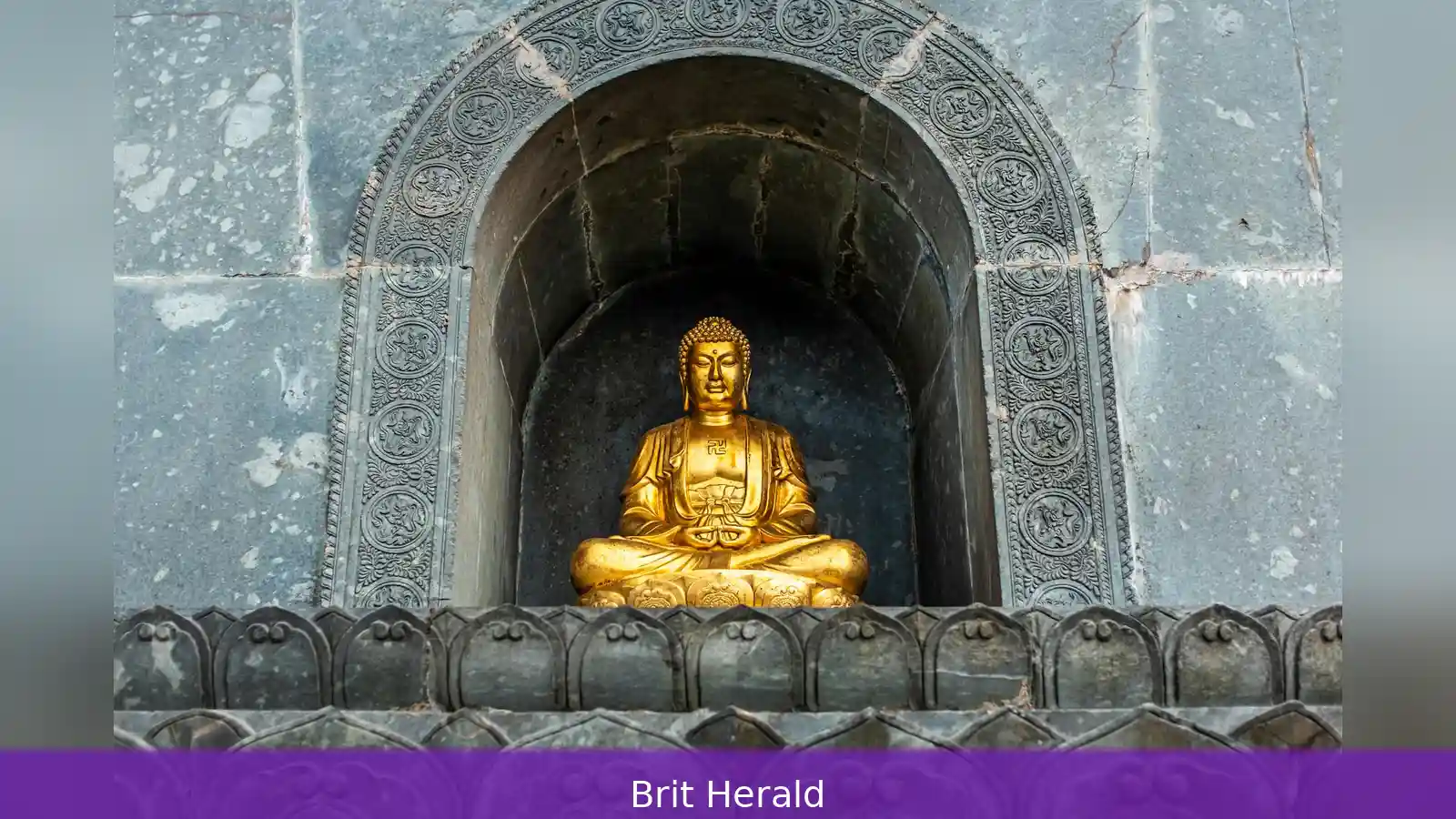
A 13th-century Buddha statue stolen from a Kathmandu temple in the 1980s was carried back to its original plinth on Friday, one of several artefacts Nepal says have been repatriated in recent years. The figure was paraded in a palanquin to the pagoda-style shrine as traditional music played and a visiting US envoy attended a ceremony timed with Buddha Jayanti. The statue first surfaced at Tibet House in New York and was returned to Nepal in 2022, the Department of Archaeology says. This reinstatement feeds into a wider push by Nepali authorities to recover items from the United States, France, Germany and the United Kingdom.
Return and ceremony
The bronze statue, dated to the 13th century, was placed back on its original stone plinth on Friday at a temple in central Kathmandu. Local worshippers carried the image in a palanquin. Musicians played traditional tunes. The ceremony coincided with Buddha Jayanti, the festival that marks the founder of Buddhism.
A replica that locals had been using for worship since the theft was moved to another part of the temple. Sunkesari Shakya, 67, a temple-goer who remembers the day the sculpture disappeared, said she felt joy at the return. "I feel so happy, we all do. Our god is coming back," she told the AFP news agency.
The statue had been taken in the 1980s and later appeared at Tibet House US in New York, where it was given by a man described as a monk, the Department of Archaeology said. Nepalese officials arranged for its transport home.
The physical restoration of the statue into its original setting followed a formal handing-over and preparatory conservation work after its return in 2022.
Who was present and why it matters to diplomacy
A visiting United States envoy attended the event. Sergio Gor, Washington's special envoy to South and Central Asia, was on a three-day visit to Nepal and took part in the ceremony.
Gor told AFP that one focus of US policy was helping to return cultural objects that "decades past got into the wrong hands." "We are trying to right a wrong from the past," he said.
The presence of a US diplomat underlines the political dimension of cultural repatriation. Nepal has pressed for artefacts to be returned from foreign collections. Authorities singled out the United States, France, Germany and the United Kingdom as countries where they're seeking more items. That list puts the issue into the realm of international diplomacy as well as museum policy.
Scale of losses and recoveries
Nepal's Department of Archaeology says a number of items have been returned in recent decades. Those include wood and stone carvings, paintings, scriptures and idols of gods and goddesses. Several of the returned objects have been reinstalled at their original locations, the department added.

The department lists many artefacts as formally missing. Conservation specialists argue the real number is far higher. Rabindra Puri, a conservation expert, told AFP that statues in Nepali temples are more than art objects. "Our statues aren't just objects of art but part of a living heritage," he said.
Nepal opened up to foreign visitors and traders in the 1950s. The country then became vulnerable to organised theft. Many pieces were taken with help from corrupt intermediaries, the archaeology department says. Their export was illegal in most cases, but the global art market carried works away to private collectors and institutions.
Heritage, community and local life
Temples and shrines in Nepal are woven into daily life. Millions of Nepalese combine Hindu and Buddhist practices. The absence of centuries-old images has left sites without elements that communities once used in worship and ritual.
Returning an original statue matters for ritual continuity. It restores a focal point for rites and ceremonies. For worshippers who used a replica, the reinstatement can change how they relate to the temple space. Local leaders and conservationists say that matters culturally and socially.
The statue's provenance, how it moved from Nepal to a New York cultural centre, highlights questions that museums and collectors face worldwide. Institutions now face closer scrutiny over items that entered their collections decades ago. Provenance research has become part of normal curatorial work, and restitution claims have prompted legal and administrative reviews in several countries.
In Nepal's case, officials have signalled they will pursue objects in multiple countries. That places pressure on museums and private owners to check purchase histories and, where appropriate, consider voluntary returns. Curators and legal teams in London, Paris, Berlin and New York have already handled similar cases involving South Asian objects in recent years.
Repatriation has both cultural and economic effects. Cultural reconnections can strengthen community identity.
They can also influence visitor patterns to heritage sites. A temple that regains a long-lost object may see renewed interest from pilgrims and tourists.
At the state level, calls for returns create diplomatic work. Governments and cultural institutions negotiate over ownership, proof of theft, and legal frameworks. Nepal's listing of the United Kingdom among countries it wants items from means British museums and authorities may face formal requests or renewed inquiries. That involves legal review and diplomatic channels as well as museum-led provenance checks.
Nepal has taken a mix of conservation, cataloguing and diplomatic steps to recover missing items. The Department of Archaeology maintains lists of missing and recovered pieces. Conservation experts help to assess objects once they're located and returned. Local communities participate in reinstallation ceremonies when possible.
Officials also stress that recovery is ongoing. The returned statue is one example among many. The government continues to pursue artefacts abroad while working to protect what remains at home.
Repatriation debates are part of a wider global conversation about colonial-era collecting, illicit trade and museum ethics. In Nepal's case, many thefts occurred after the country opened more fully to foreign visitors and trade in the mid-20th century. Corrupt practices played a role in those losses, the archaeology department says, which complicates claims of lawful export.
For communities that have preserved rituals for centuries, the return of objects isn't purely symbolic. It re-establishes continuity.
Related Articles
- May Day revives debate over automation and job loss
- Trump threatens to pull US troops from Italy and Spain
- US freezes Joseph Kabila's US assets over alleged support for M23
"We are trying to right a wrong from the past," Sergio Gor, Washington's special envoy to South and Central Asia, said.
This article was created with AI assistance.


