
Spain are 26 per cent favourites to lift the expanded 48-team World Cup in 2026, according to a Goldman Sachs model published on May 29. The bank puts France on 19 per cent, Argentina on 14 per cent, Brazil on 8 per cent and England on 5 per cent. The tournament runs from June 11 to July 19 across the United States, Mexico and Canada, and FIFA says it will be the first major competition to use a package of law changes approved by the International Football Association Board.
Games will be quicker, and referees will have new tools, because IFAB approved a package of amendments that FIFA says will apply at the World Cup and in the 2026-27 season.
Rule changes to alter match flow
FIFA’s Chief Refereeing Officer Pierluigi Collina told reporters the changes are "landmark" and said the tournament will be the first major competition to use them. The measures are aimed squarely at tackling discrimination, reducing time-wasting and speeding match tempo.
One high-profile change is an automatic red card for a player who covers their mouth with a hand, arm or shirt in confrontational situations. The laws make clear, however, that covering the mouth during friendly on-field exchanges between teammates won't be punished. Players and team officials who leave the field to protest a referee decision will face red cards, and teams that cause a match to be abandoned will forfeit the game.
Referees will also introduce a visible five-second countdown, signalled with a raised hand, to govern take-ons for throw-ins and goal-kicks. If the restart isn't completed in time, possession will be awarded to the opponents.
The amendment is an attempt to make short restarts both fairer and faster, and to give referees a clear mechanism to police them.

The substitution and treatment protocols have been tightened too. Substitutes must wait up to 10 seconds for the outgoing player to leave at the nearest boundary point.
If the substituted player doesn't leave within that window, the substitute may only enter at the first stoppage after one minute and with the referee’s signal, though exceptions exist for injury and safety. If medical staff enter the pitch to treat an outfield player, that player must sit out one minute of play after the restart except in defined cases such as goalkeeper injuries, severe head injuries, collisions that require immediate attention or when the injured player is due to take a penalty.
The revised VAR protocols will sit alongside these measures. VAR has been used in FIFA competitions since 2017, and the new laws are intended to coordinate on-field management with video review so that the overall effect is a cleaner, less interrupted match.
How Goldman Sachs sees the title race
Goldman Sachs built its forecast from teams' Elo ratings and additional factors including attacking talent, momentum, mentality and geography. The bank ran simulations using a database of nearly 20,000 mandatory international matches since 1978 and updates its projections daily during the tournament.
The bank said Spain lead largely because they have the highest Elo ranking and strong scoring talent. Argentina, the defending champions, are penalised in the model by what Goldman Sachs describes as a "winner's slump" effect. France are among the favourites, but the bank notes that France's path is complicated by a likely semi-final meeting with Spain. England is marked down for historical tournament underperformance, geographic headwinds and what Goldman Sachs calls an unfavourable draw.
The raw probabilities are clear. Spain top the table at 26 percent, then France at 19 percent, Argentina at 14 percent, Brazil at 8 percent and England at 5 percent. Those numbers encapsulate both form and structure: Elo captures a long-run quality, while the additional factors try to account for the short-run noise of injuries, momentum and matchups.
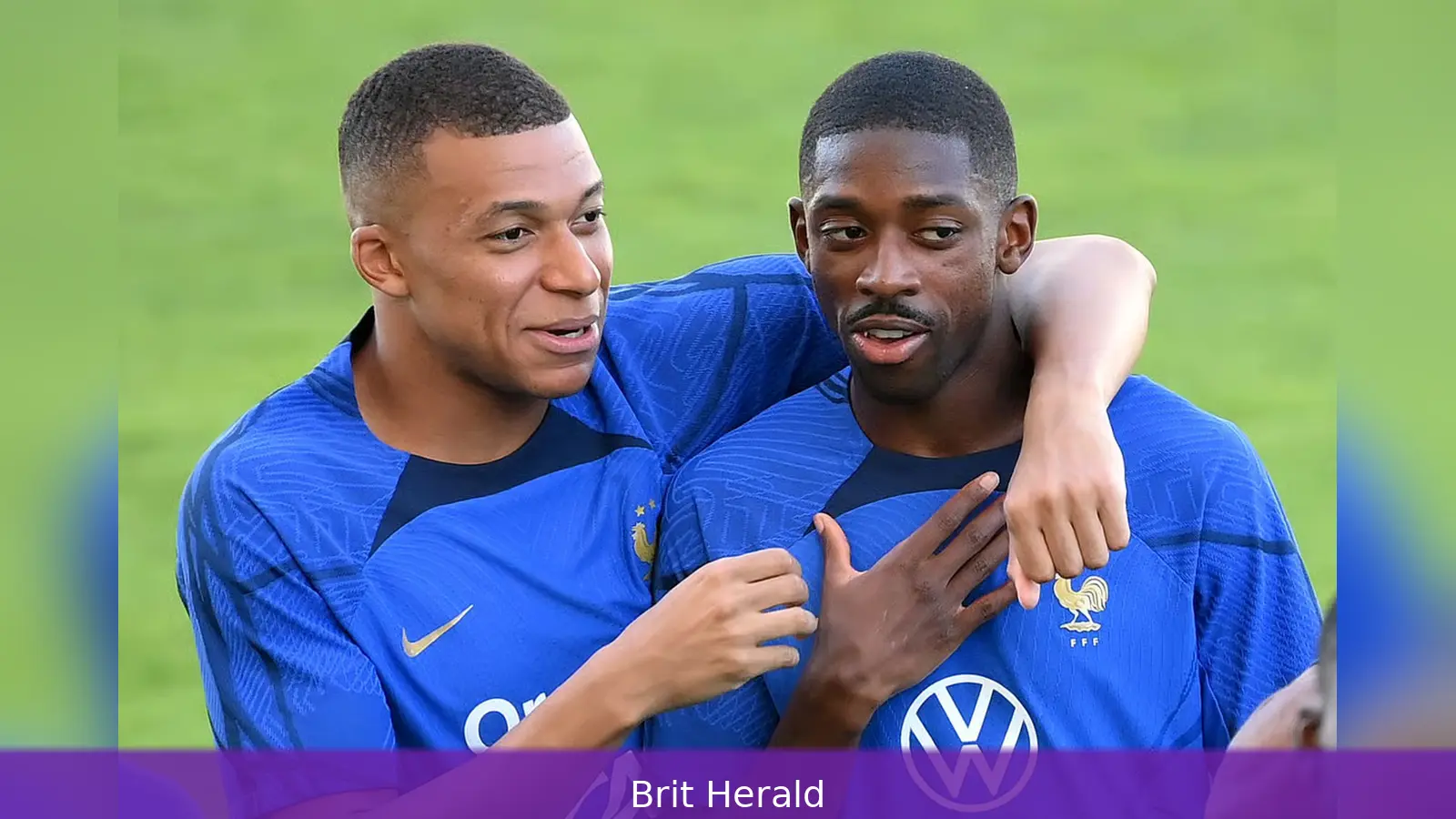
France coach Didier Deschamps enters the tournament on a notable managerial milestone, having said he will step down after the World Cup. When asked about naming his squad, Deschamps said: "It is a funny feeling, I usually try to hide my emotions. But I am fine with it all." France's group fixtures include matches at MetLife Stadium on June 16 against Senegal, at Lincoln Financial Field on June 22 against Iraq, and at Gillette Stadium on June 26 against Norway.
Beyond the favourites, the combination of amended laws and an expanded 48-team format adds an extra layer of uncertainty. Teams will need to prepare not just for opponents, but for a tournament in which restart discipline, substitution timing and medical protocols are enforced more strictly than at previous World Cups.
Related Articles
- Mexico 2-0 Ghana, final friendly boost before 2026
- Soccer Aid 2026: 6:30pm kick-off at London Stadium
- Tommy Fury vs Eddie Hall: six-round clash on June 13
The tournament opens on June 11, 2026, with group fixtures running through late June. Originally reported by Reuters.
This article was created with AI assistance.


