
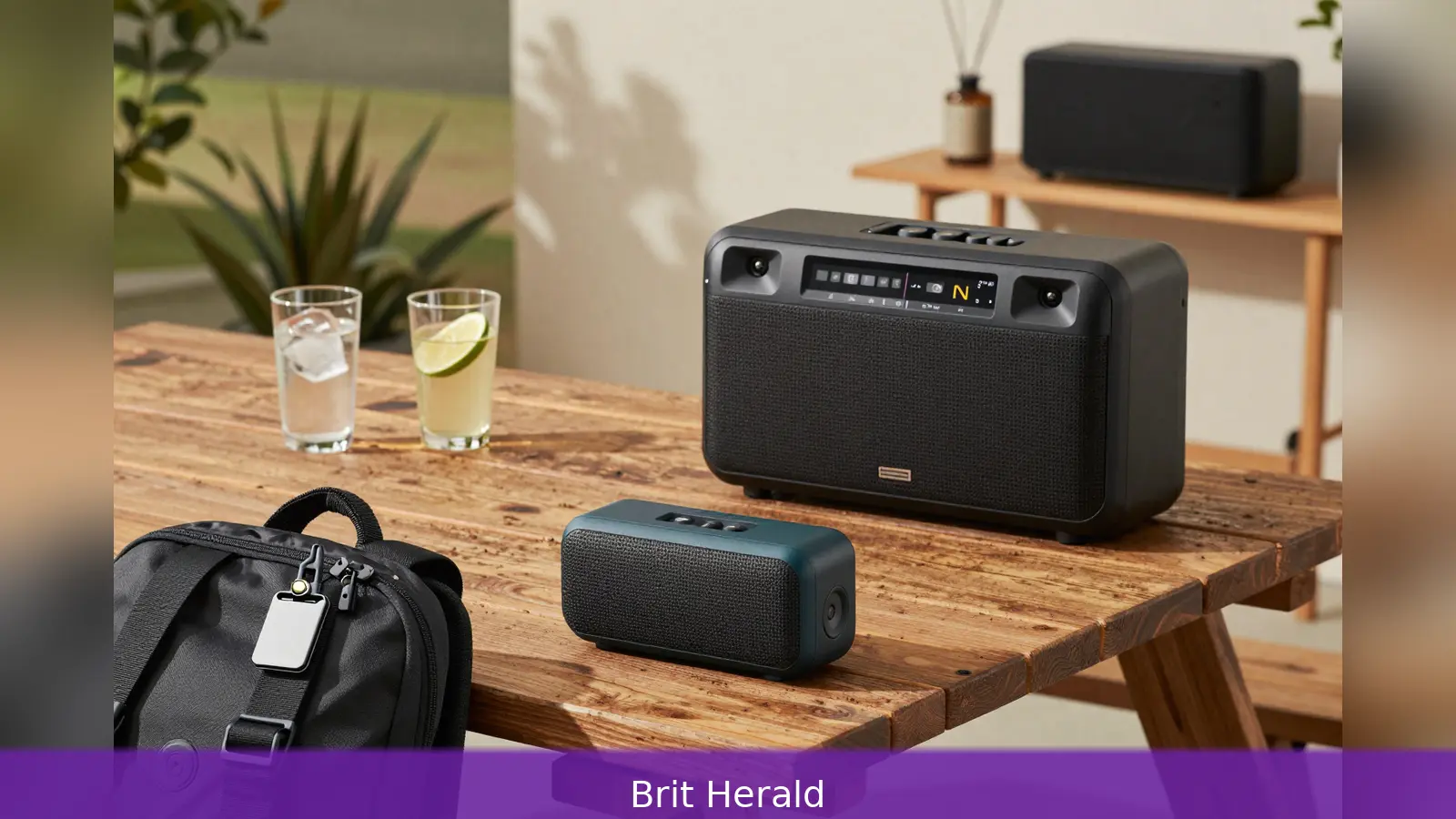
Decide your primary use, because that single choice will determine which speaker you should buy. We tested 42 portable Bluetooth speakers across budgets and sizes, combining hands-on trials with laboratory checks to measure loudness, controls, microphone quality and behaviour in noisy or open spaces. The vetted picks map to four durable use cases: travel, rugged outdoor parties, compact home listening and ecosystem speakers for multiroom audio. Read the checks and the short purchase plan to pick the right speaker for your needs.
42 models were tested across price points from budget to premium, with hands-on trials balanced alongside laboratory checks to reflect how speakers behave when you actually use them. Testers measured loudness with a phone app, assessed ease of controls, judged microphone pickup for speakerphone use, and noted how each product managed headroom in noisy or open environments.
1. Decide your primary use case
Primary use is the single decision that shapes everything else. First, pick whether the speaker will travel in a pocket or a rucksack, live on your bookshelf, act as the centrepiece for backyard parties, or join a multiroom system in the home. Each choice points to a different set of trade-offs in size, battery, ingress protection and sound signature.
For pockets and backpacks, the tests show small, sub-1 kg units that trade battery and raw loudness for portability while still delivering surprisingly favourable sound for their size. In this category, compact models from established brands were singled out for portability. For backyard or beach parties, larger Boombox-class speakers were highlighted repeatedly for deep bass and the ability to run loud for many hours. Home and bookshelf listening favours speakers that prioritise clarity, a wider stereo image and networking features; here Sonos and some Marshall models earned recommendations for richer, room-filling signatures and integration options.
2. Match connectivity and ecosystem to how you listen
Connectivity now splits broadly into Bluetooth-only portables and hybrid Wi-Fi/Bluetooth ecosystem speakers. If you want simple, ad-hoc pairing with a phone or laptop, a strong Bluetooth implementation with support for newer codecs and features such as Auracast will give better range and potential fidelity. If you plan to build a multiroom system or to stream from multiple services without a phone tethered to playback, favour Wi-Fi-capable speakers that explicitly state support for the services you use.
Several recent Sonos models combine Wi-Fi streaming and Bluetooth so they can sit in a house system or serve as a standalone portable. The Sonos Play model tested is a hybrid: it connects to Wi-Fi and also pairs over Bluetooth, and can be grouped with other Sonos speakers for stereo pairs or multiroom playback. That flexibility makes hybrid units a sensible choice if you expect to move the speaker between rooms or to use it without your phone present.
3. Prioritise battery life, durability and ingress protection
Battery capacity matters differently depending on where the speaker will live. Portable hybrid speakers are being built with larger battery packs; in our testing some portable models delivered long runtimes on Bluetooth at moderate volume.
Outdoor-focused party models routinely advertise long playtime and often deliver extended runtimes in practice, while compact travel units trade runtime for lighter weight and smaller form factor.
Ingress protection should be matched to the expected environment. IP67 implies full dust protection and limited immersion resistance, while IPX4 covers splash resistance only. Ruggedness also varies by marketing and construction: some entrants are marketed to military-standard drop tests, while mainstream party speakers rely on rubber bumpers and splash-resistant designs. If you expect immersion or heavy beach use, choose models with IP67. If your use is primarily occasional splashes around a barbecue, IPX4 may be enough.

Practical longevity items are also worth a second look. Removable or user-replaceable batteries appear on some newer models and can extend product life if you plan to keep a speaker for years. Swappable battery systems exist on some party-focused models to help prolonged use at events. If you want a speaker that will still be useful in several years, check for replaceable parts before you buy.
4. Evaluate sound profile and daily features
Sound profile must match the listening environment. Speakers designed for parties prioritise bass output and headroom, and that often comes at the cost of portability and a narrower stereo image. Home or bookshelf speakers trade maximum loudness for clearer midrange and a wider stereo image, which makes them the better pick for detailed listening at sensible volumes. Small budget models, meanwhile, can outperform phone speakers by a large margin, offering surprising fullness for their price.
If the deepest bass is the priority, choose a larger speaker with dedicated woofers and passive radiators; reviewers repeatedly called out these features for superior outdoor bass performance. For voice calls, microphone quality matters: testers highlighted certain models for clear voice pickup and effective noise filtering. Practical controls, durable physical buttons, clear volume stepping and reliable Bluetooth pairing were repeatedly cited as more important for everyday satisfaction than headline specifications.
5. The buying checklist and audition routine
When you are deciding between models, follow this short checklist at the point of purchase. First, confirm the Bluetooth version and supported codecs if fidelity matters. Second, verify battery capacity and the vendor's stated runtime, and compare to independent test notes for real-world runtime. Third, check the ingress protection rating and any solid manufacturer claims about ruggedness. Fourth, verify ecosystem compatibility for Wi-Fi models, including whether the speaker supports Apple AirPlay 2, Spotify Connect or the proprietary app ecosystem you prefer. Fifth, inspect controls and the microphone if you plan to take calls.
Wherever possible, audition the speaker with music you know. Try a bass-heavy track to stress low frequency response, a vocal-led recording to test midrange clarity, and a complex arrangement to judge stereo imaging and detail recovery. Check pairing and re-pairing behaviour with your phone and laptop, and confirm battery performance at the listening level you plan to use. If you can't audition in person, buy from a retailer with an easy returns policy and test at home with the same routine.
Price and retail timing are a practical part of the decision. The tests covered very low-cost options to premium investments, and the comparative picks included value brands alongside established names. The comparative picks included a best-overall midpriced recommendation, a budget compact speaker as the value pick, and larger party speakers singled out for bass and outdoor use. Seasonal sales and promotions can materially change the effective price; match your target price against current retailer offers rather than list price to find the best deal for the model you choose.
Brand activity is high in 2026, which is good and annoying at the same time. Established audio brands continue to expand both ends of the market: compact travel speakers, midpriced home portables, and large outdoor boxes with extended playtime and linking features.
Some consumer-electronics companies are introducing speakers that add AI features for music discovery and DJ-style effects. That product churn means a current favourite may be superseded by a refreshed model within a product year, so weigh the prospect of imminent refresh against immediate needs.
The Guardian's comparative testing named category winners ranging from budget travel speakers to large-party models, and emphasised that a small investment in a dedicated Bluetooth speaker yields markedly better sound than built-in phone speakers, while hybrid Wi-Fi/Bluetooth speakers add flexibility for home multiroom setups. Factor that finding into how much you are prepared to spend on integration versus portability.
Practical scenarios. If you travel regularly and value weight and pocketability, choose a compact Bluetooth unit under 1 kg and accept shorter runtime for the gain in portability. If you host frequent outdoor parties, pick a Boombox-class speaker with dedicated woofers, passive radiators, swappable batteries where available and an IP67 rating if you want immersion protection. And if you want one speaker that lives in the home and joins other devices, buy a Wi-Fi-enabled hybrid that supports AirPlay 2 and Spotify Connect and can be grouped as a stereo pair or as part of a multiroom setup.
Finally, practical controls beat specsheet novellas. Durable buttons, predictable volume steps and simple pairing will make daily life less fiddly. If you plan to take hands-free calls often, favour models testers praised for mic performance. If longevity is a priority, check whether the battery is replaceable or whether the maker offers swappable packs.
Return the favour to your future self. Buy from a retailer that offers a return window long enough to perform the audition routine at home. If you are torn between portability, party output and ecosystem integration, pick one model from each category that matches your key requirement and compare them side by side at a store or on a returnable online order.
In short: First, decide whether you need pocket portability, party volume, home fidelity or multiroom integration. Second, match Bluetooth or hybrid Wi-Fi connectivity to that use. Third, check battery capacity versus measured runtimes, and choose the appropriate IP rating. Fourth, prioritise practical controls and microphone quality. Fifth, audition with your music or buy from a retailer with a generous returns policy.
Related Articles
- Prove your writing is human: 7-step audit
- Clostridioides difficile: NHS clinical guide (NICE, UKHSA)
- Choose the best mobile phone plan in 8 clear steps
If you remain undecided, pick one model from the travel, party and ecosystem categories and compare them side by side, in store or via a returnable online order. Use a bass-heavy track, a vocal-led recording and a complex arrangement to judge low end, midrange clarity and stereo detail, and check pairing behaviour and battery life at the listening level you plan to use.
This article was created with AI assistance.


