
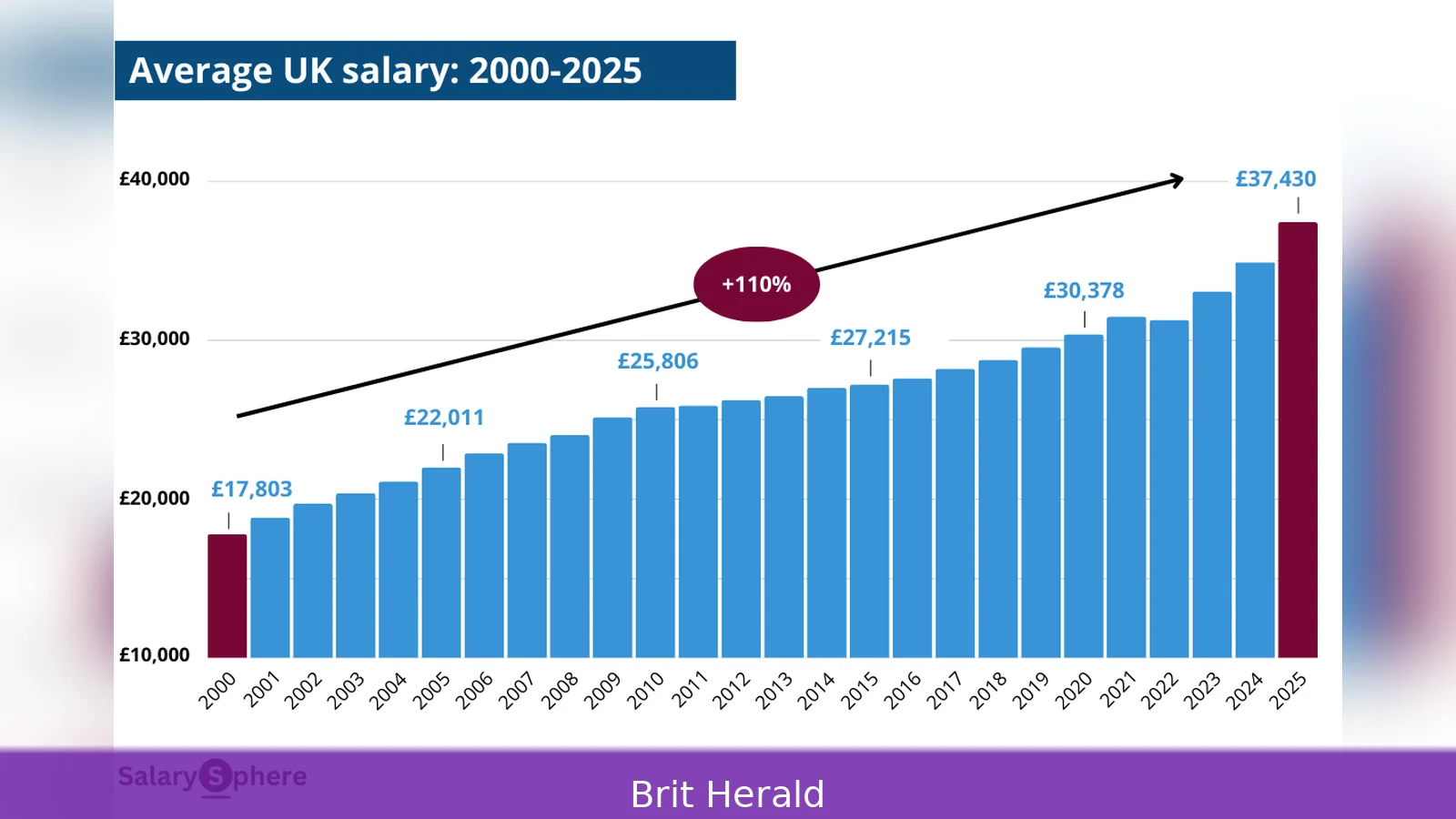
A clear snapshot of what people earn in Britain in 2026. The typical full‑time salary sits above pre‑pandemic levels, but pay still varies a lot by industry, age and place. This guide sets out the headline numbers, sector averages, regional gaps and what to expect for pay soon.
Key figures — quick reference
Quick numbers to bookmark. All figures are annual gross pay for full‑time employees unless stated and are for 2026 unless otherwise noted. Figures come from ONS estimates, employer surveys and sector reports.
- UK mean full‑time annual pay: £37,900 — up 3% on 2025, according to ONS estimates.
- UK median full‑time annual pay: £32,400 in 2026 (ONS median), up c. £1,000 from 2025.
- Information Technology (IT) average: £60,000 — typical range £40,000–£95,000 depending on specialism and region.
- Finance & professional services average: £57,000 — base pay; senior bankers and management often earn total packages above £120,000 including bonuses.
- Legal sector average: £65,000 — large firm partners and senior counsel commonly exceed £150,000.
- Healthcare (NHS & private combined) average: £42,000 — NHS banded pay means many nurses earn £27,000–£42,000, while consultants average £98,000–£140,000.
- Education (schools & universities) average: £33,000 — headteachers and professors typically earn £60,000–£90,000.
- Construction average: £38,000 — site managers and specialist trades often £45,000–£70,000.
- Retail average: £24,000; Hospitality average: £22,000 — high levels of part‑time pay pull sector means down.
- Public sector average: £36,500 — earnings vary by grade and location; incremental pay scales remain common.
- National Living Wage (21+): £12.21/hr from 1 April 2025 — equivalent to c. £23,800 at 37.5 hrs/week.
- UK regional pay gap: London mean pay ~£47,000 — c. 24% higher than the UK mean; South East mean ~£44,000.
- Regional examples: South East £44,000; East of England £39,000; North West £34,000; Yorkshire & Humber £33,000; Scotland £35,000; Wales £30,000; Northern Ireland £31,000 (ONS rounded figures).
- Median starting graduate salary: c. £28,000 in 2026 (UCAS and graduate surveys).
- Gender pay gap (full‑time): c. 7.5% in 2026, according to national reporting requirements; gap wider in senior grades.
Detailed breakdown by industry
Here’s the breakdown by broad sectors. Figures are averages and will vary by firm, role and experience. Ranges show entry, typical mid‑career and senior pay where possible.
Technology and Fintech
Tech roles remain some of the highest‑paid. Average pay for IT and tech‑related roles is around £60,000. Senior software engineers, data scientists and product managers commonly command base salaries of £70,000–110,000 in London and the South East; total packages including equity can push value materially higher at scaleups and big tech firms. Entry roles typically start at £35,000–£45,000; mid‑career developers often sit at £50,000–£70,000. Fintech mixes banking pay and tech packages—senior roles often include bonuses or equity worth tens of thousands annually.
Finance and Professional Services
Banking, investment management, audit and consulting still pay above the national mean. Average base pay in the sector is £57,000, but bonus pay skews totals: average bonus in investment banking juniors can be 20–50% of salary in good years; senior relationship managers and partners routinely see total pay of £100,000–£200,000. Trainee accountants start at £26,000–£38,000 depending on firm and location; qualified chartered accountants commonly earn £60,000–£80,000 in London.
Legal and Professional
Lawyers in large commercial firms average £65,000 overall; newly qualified solicitors in top London firms start near £80,000, while smaller firms pay £30,000–£55,000. Partners in major firms commonly exceed £150,000 and may receive profit shares that lift annual take‑home markedly. Paralegals and junior legal staff typically earn £20,000–£40,000.
Healthcare
Healthcare pay is highly stratified. Combining NHS and private roles gives an average of £42,000. Nurses in 2026 fall largely within banded NHS rates, often £27,000–£42,000 depending on experience and locality. Junior doctors' basic pay ranges from £38,000–£46,000 in early training; consultants average £98,000–£140,000 depending on specialty and private practice income.
Education
Teachers in state primary and secondary schools generally earn between £33,000 and £50,000 once seniority and location supplements are included; headteachers and senior leaders often exceed £60,000. University academic pay ranges widely: lecturers £38,000–£45,000; senior lecturers and readers £48,000–£60,000; professors £60,000–£90,000.

Construction and Manufacturing
Construction average pay is £38,000. Skilled trades such as electricians and plumbers commonly earn £30,000–£50,000, with self employed or highly specialised tradespeople above that. Site managers average around £45,000–£70,000. Manufacturing pay varies by subsector: automotive and aerospace engineers often sit above £40,000; general manufacturing averages nearer £31,000.
Retail, Hospitality and Leisure
Retail mean pay is £24,000 and hospitality £22,000. High incidence of part‑time and zero‑hours contracts keeps averages low. Store managers and senior hospitality managers can earn £40,000–£60,000; head chefs and experienced sommeliers may also reach these levels in top venues.
Public Sector and Utilities
Public sector average stands near £36,500. Civil service pay bands produce tight ranges by grade; senior civil servants often reach £60,000–£130,000. Utilities and energy sector pay tends to be above the national mean in technical roles—engineers and specialists typically earn £45,000–£70,000.
Regional differences
Pay still correlates strongly with geography. London remains the top paying region, with a mean of around £47,000. But regional variation isn't just about higher London pay: the South East averages £44,000; the East of England £39,000. Northern regions lag: North West mean pay c. £34,000; Yorkshire & Humber £33,000. Wales and Northern Ireland record means nearer £30,000–£31,000. Scotland's mean (£35,000) sits between the north and south figures.
But cost of living shifts the picture. London employers often pay location allowances or higher base pay to cover housing and commuting costs. Yet remote and hybrid working has narrowed advertised salary differentials for some tech and professional roles since 2022–25; many employers now advertise two or three pay bands depending on location rather than a single national rate.
Pay by age and experience
Average pay rises with age and experience but flattens for older cohorts. Median full‑time pay by age (ONS rounded): 22–24: £27,000; 25–29: £30,500; 30–34: £36,000; 35–39: £38,500; 40–49: £39,500; 50–59: £38,000. Graduate starting pay is around £28,000, but top graduate schemes pay £35,000–£42,000 in banking, consulting and tech.
Forecast and what to watch in 2026–27
Basically, pay growth is moderating but remains positive. Aggregate pay rose c.3% year‑on‑year in 2026, down from higher rates during the post‑pandemic rebound. Employers' pay settlements reported in early 2026 mostly averaged 2%–3.5% across sectors, with higher settlements (3.5%+") in health, education and some tech firms trying to retain staff.
Still, real‑term changes depend on inflation. If inflation falls back toward 2% later in 2026, modest nominal pay rises will translate into real wage growth. If inflation stays elevated, workers will see little improvement in purchasing power despite nominal increases. Tight labour markets in tech, health and skilled trades should sustain above‑average pay rises for in‑demand roles.
Employers are increasingly using non‑salary rewards: hiring bonuses, enhanced pensions, flexible hours, and remote allowances. Equity schemes remain a major part of senior pay in start‑ups and scaleups, and sign‑on bonuses are common in hard‑to‑fill specialist roles.
How to use these figures
Compare job adverts, sector reports and ONS Annual Survey of Hours and Earnings (ASHE) tables to check where a specific role sits. Salaries quoted here are averages; negotiate on total package including pension, bonus, flexible working and progression prospects. For graduates and early career workers, sector choice and location heavily influence starting pay and early earnings trajectory.
Related Articles
- UK Right to Repair Law 2026: What It Means
- Best E-Readers UK 2026 — Kindle, Kobo Compared
- How AI Is Transforming UK Finance 2026
Pay in 2026 still rewards technical skills, seniority and geography. London and professional services remain at the top, while retail and hospitality lag because of part‑time patterns. Watch inflation, sector demand and settlement rounds through 2026–27: they'll determine whether nominal rises turn into real pay gains.
This article was created with AI assistance.


