
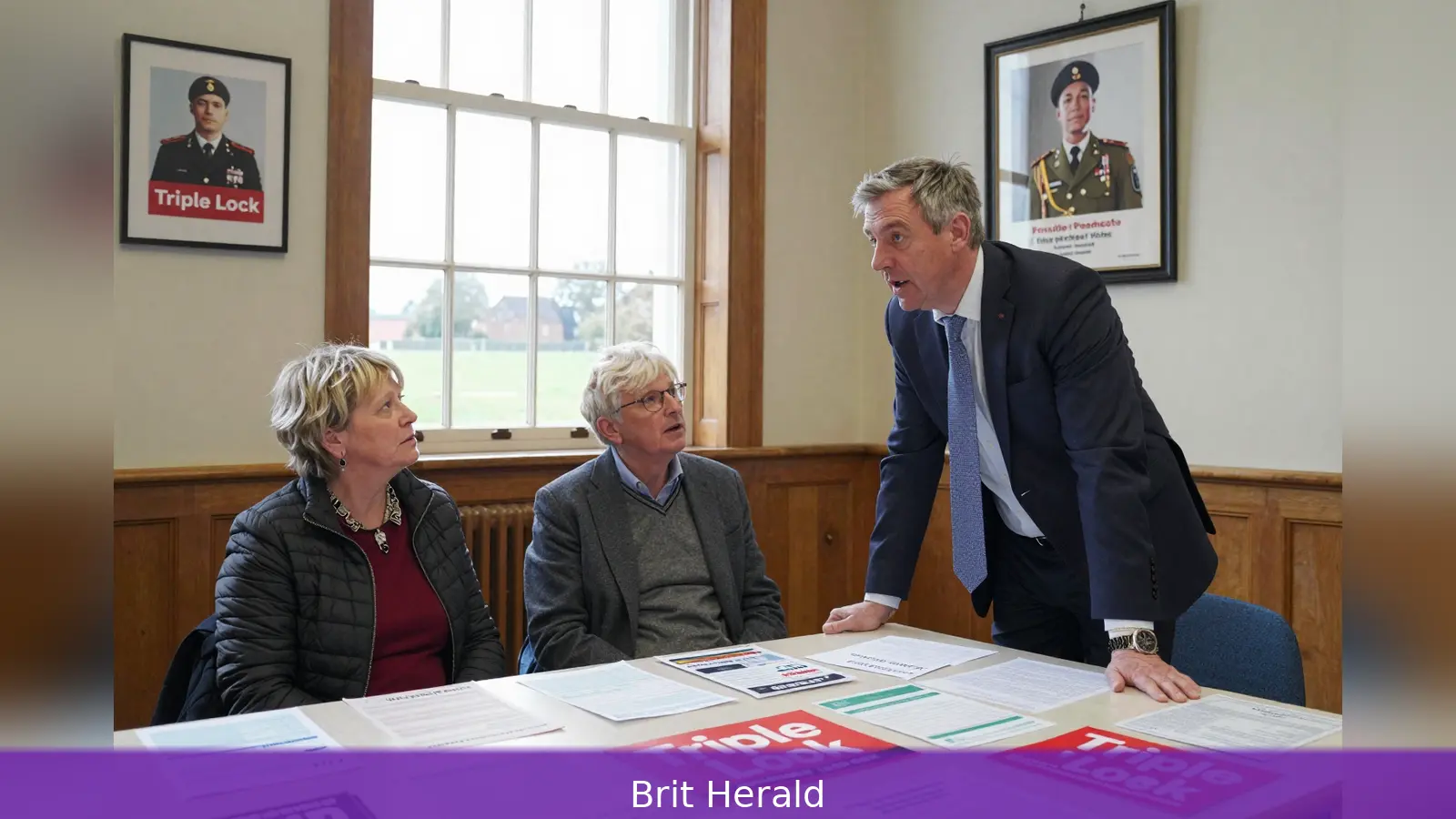
Andy Burnham has pledged to keep the state pension triple lock while some Labour figures and defence commentators want it scrapped to free up funds by 2030. The triple lock guarantees the state pension rises each year by the highest of inflation, average earnings growth or 2.5 per cent, and Burnham told the i paper he would honour Labour's manifesto commitment for the remainder of the current Parliament. The Office for Budget Responsibility projects the cost of that guarantee will swell by 2030, and Rachel Reeves has confirmed income tax bands will remain frozen, a combination that is pushing more pensioners into tax. The immediate political test is the Makerfield by-election, where Burnham's stance is already being debated.
Mr Burnham's insistence on preserving the triple lock sits uneasily beside the OBR's projection of a rising pension bill that will take a larger share of total welfare spending. The Office for Budget Responsibility estimates the triple lock will increase the cost of the state pension over the coming years, a figure that critics say makes it a natural target for fiscal reallocation.
The fiscal squeeze
The arithmetic is simple. The full state pension is now close to or above the personal allowance for many, which would make some pensioners liable for income tax, and Rachel Reeves, the Chancellor, has confirmed that current income tax bands will remain frozen for the medium term, a policy widely described as creating fiscal drag.
That fiscal drag matters in two ways. First, it shifts the tax burden without an explicit rate rise by pulling new taxpayers into the system. The OBR has projected additional receipts from newly liable pensioners over the next five years, implying modest average extra tax bills for those affected. Second, it increases the share of public spending absorbed by pensioner entitlements at a time when other priorities are pressing.
Those other priorities include the Defence Investment Plan and commitments set out in the 2025 Strategic Defence Review. Defence commentators have suggested the triple lock could be loosened to bolster defence spending. Some Labour MPs have pressed the same argument, urging a reprioritisation of public finances towards younger households and national security.

Politics inside Labour and on the doorstep
Burnham has framed his promise as a matter of political trust. He told the i paper he would honour Labour's manifesto commitment to maintain the triple lock for the remainder of the present Parliament, which is due to end by 2029 at the latest, and warned that tearing up the pledge now would damage political trust.
He stopped short of committing beyond that point.
That position reflects two conflicting pressures on the Labour leadership. On one side, older voters have a concentrated and predictable electoral presence, and campaign groups warn that pensioners on fixed incomes are feeling a combined squeeze of rising costs and new tax liabilities. On the other, defence figures and several MPs argue that projected pension costs could be redeployed to address capability gaps and to ease burdens on younger households.
Burnham has also signalled selective sympathy for groups who lost out in past pension changes. He told hustings he was "uncomfortable" with how women affected by changes to the state pension age were treated and said they "deserve some recompense," language that briefly raised hopes among Women Against State Pension Inequality, known as WASPI. His team later clarified he doesn't intend to reopen large-scale financial compensation, and indicated he would consider measures similar to Greater Manchester's approach, such as early access to concessionary travel.
The Parliamentary and Health Service Ombudsman previously recommended payments in the £1,000 to £2,950 range for maladministration, a suggestion the government hasn't adopted. That partial sympathy allows Burnham to signal compassion without relinquishing fiscal discipline, but it also risks alienating campaigners who seek direct redress.
For Labour MPs pressing for change the OBR numbers are the decisive lever. The projection that the triple lock will substantially raise pension costs underpins calls to strip the guarantee from long-term fiscal plans and redirect funds. For Burnham supporters the calculation is political as much as fiscal: honour the manifesto now, defer the contest for the next Parliament.
Those competing reads will play out in constituency conversations. The Makerfield by-election has been identified as the next scheduled milestone in Mr Burnham's return to national politics, and it's the first place voters will judge whether the pledge is a genuine protection for pensioners or an obstacle to other priorities.
Related Articles
- 8.7m pensioners overcharged by about £5 each, HMRC apologises
- Fury wins majority decision over Hall, 59-56, 58-56, 57-57
- Saving versus consolidation: Yang's low-cost bet
Watch the Makerfield by-election and the OBR's next fiscal projections to see whether Labour treats the triple lock as sacrosanct or as a source of savings for defence and younger voters.
This article was created with AI assistance.


