
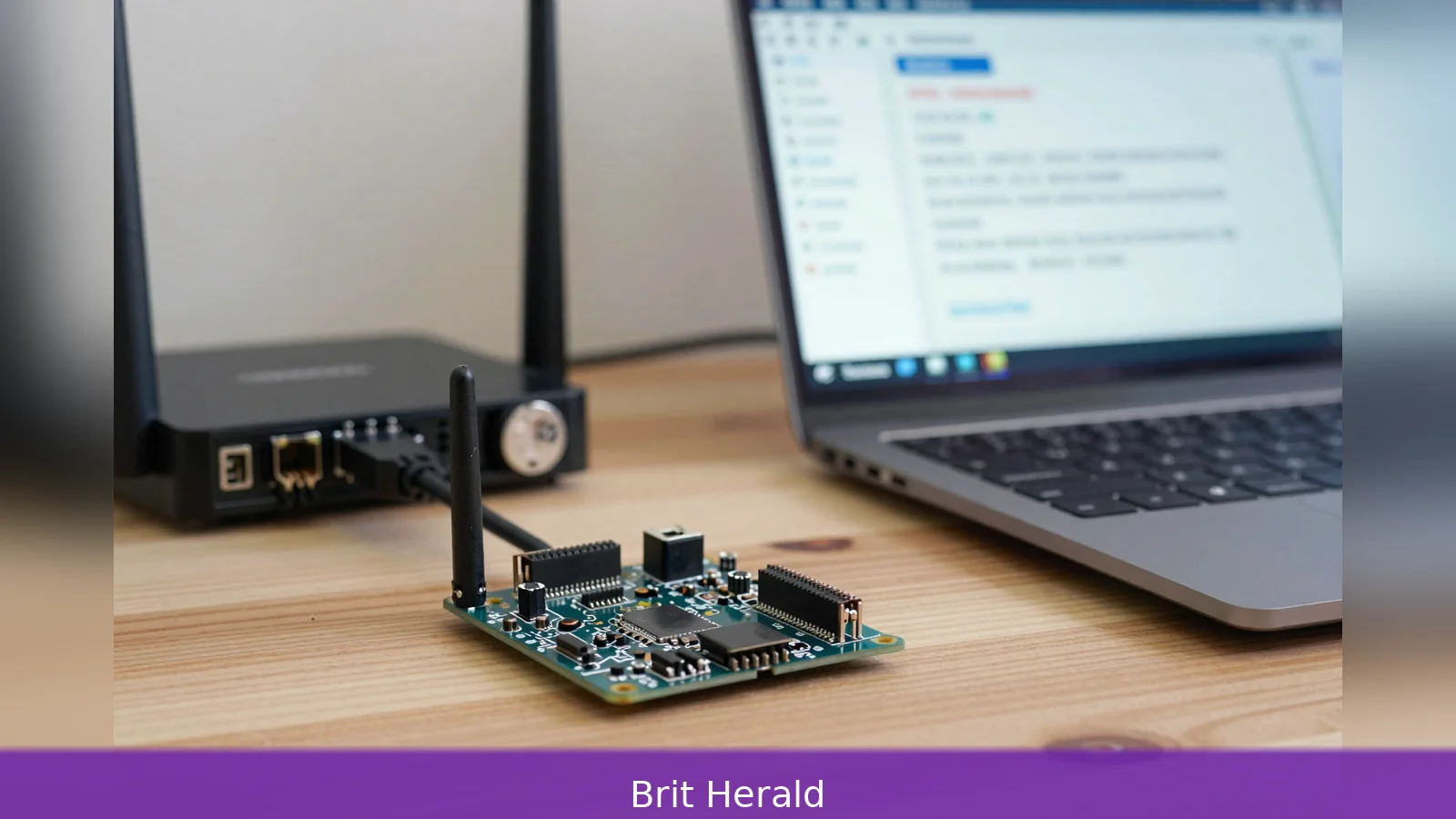
A $7 microcontroller performs the same whole-home ad blocking task that often pushes people toward pricier Raspberry Pi single-board computers. ZDNET's hands-on report found an ESP32-S3 board can be flashed with open-source firmware and begin blocking adverts across a household network in minutes. The tiny board intercepts DNS lookups and returns null addresses for millions of known ad and tracker domains, protecting smartphones, smart TVs, game consoles and other devices without installing software on each one. For households with limited bandwidth or small offices, the setup reduces data use and offers a simple network-level privacy control.
Small size, big capability: the ESP32-S3 packs dual-core processing, Wi-Fi connectivity and enough memory to run DNS filtering at household scale while costing roughly $7. That apparent mismatch explains why makers and privacy-minded users are reconsidering the hardware they need for simple network tasks, particularly as Raspberry Pi prices climb and Pi boards prove more capable than required for a DNS sinkhole.
ZDNET's hands-on report describes a straightforward technical path. Users flash existing open-source ESP32 ad-block firmware to the microcontroller, configure it to act as a DNS server and point home devices to the board for name resolution. The device consults blocklists that contain millions of advertising and tracking domains and replies with loopback or null addresses for matches. The connection never completes, so an advert never downloads and a tracker never receives its callback.
The approach mirrors the DNS sinkhole methodology used by tools such as Pi-hole, but it moves the service from a single-board computer to a microcontroller. That shift matters because DNS-level filtering protects every device on a network, including ones that can't run browser extensions or native ad blockers: smart TVs, streaming sticks, security cameras, IoT sensors and consoles. ZDNET noted the practical upside for households with constrained bandwidth and for small offices where saving data and limiting third-party traffic are priorities.
ZDNET's hands-on testing supplied the practical proof point. According to the report, the entire process from flashing firmware to seeing live ad blocking can be completed in minutes. For users who want quick gains without buying, powering and managing a Raspberry Pi, the tiny ESP32-S3 proves to be a low-cost, low-friction option.

DNS sinkholes are effective but not omnipotent. The build won't reliably block embedded or in-stream adverts that are served from the same domain as the video or platform, for example on some streaming services.
Those ads are delivered over the same host name as the main content, so returning a null address would also break the service.
Power, performance and compatibility trade-offs remain relevant. A Raspberry Pi or other single-board computer will still be the better choice for people who want additional functions such as VPN termination, local logging, complex routing, or other server-grade tasks that exceed the microcontroller's remit.
Still, for the defined use case, simple, inexpensive DNS filtering for a small network, the ESP32-S3 meets the need. It reduces bandwidth consumption by preventing ad asset downloads and can speed page loads by eliminating fetches for blocked content. It also supplies a straightforward privacy control that aligns with what privacy advocates recommend: stop third parties from getting connections in the first place, rather than retrofitting each device with software.
The story is also a small commentary on hardware economics. As Raspberry Pi boards have become more powerful and, at times, more expensive, makers have looked for more economical appliances to do one job well.
The ESP32-S3 is cheap, physically tiny and, in this task, enough. For many households the extra headroom a Pi offers isn't worth the cost or the power draw.
ZDNET's report supplies the real-world demonstration that matters to most readers: the idea isn't a theoretical hack. The tested setup worked quickly, used minimal hardware and delivered measurable benefits where they count: fewer bytes transferred and fewer tracker connections from networked devices.
Related Articles
- Americans' 401(k) average hits $167,970
- Trump threatens 100% tariff on European goods over digital services taxes
- 643 lithium-battery devices found in hold baggage as summer holidays start
My read is that the next signals to watch are whether makers package user-friendly kits, and whether firmware projects can sustain blocklists and regular updates. Those two factors will decide if microcontroller ad blockers move from hobby hack to household staple.
This article was created with AI assistance.


