
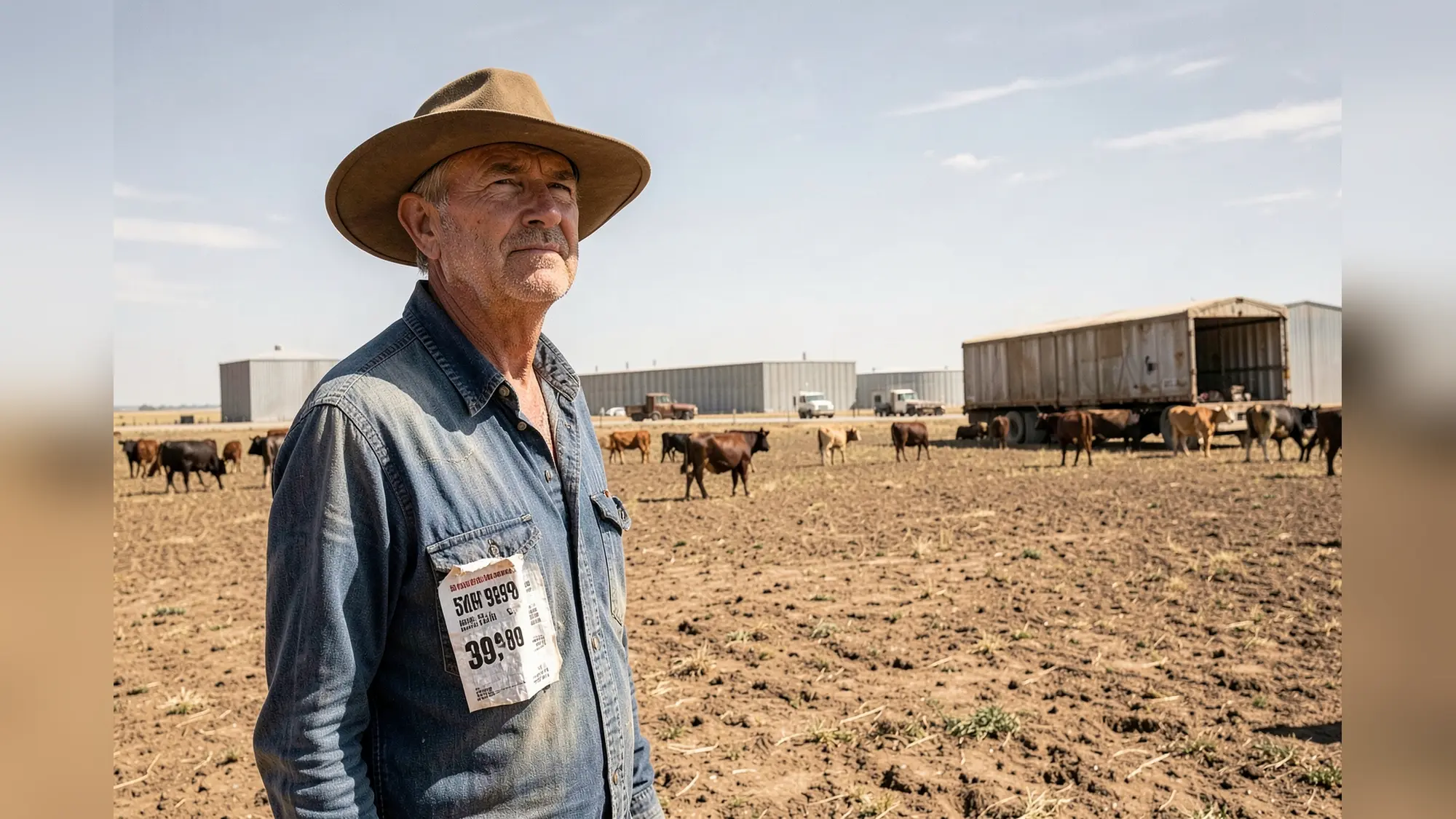
A 12% jump in supermarket beef prices signals a supply shock, not general inflation, the BBC World Service's Follow the Money reported. The rise outpaced headline inflation by more than three times and coincides with the US national herd falling to its smallest size since 1951 at the start of 2026. Households are paying more for steaks and mince while many independent ranchers see higher receipts offset by sharply higher input costs.
12% is the headline number because supermarket beef costs have risen far faster than overall prices, the BBC World Service's Follow the Money said. That gap matters because it signals a supply shock specific to beef, not a general food price move. For shoppers the consequence is obvious at the till. For the industry the pathway is less visible but direct.
What moved retail prices?
The immediate cause is a shortage of cattle. The BBC reports drought across many states and disease pressure reduced herd numbers, leaving the US with the fewest cattle since 1951 at the start of 2026. With less boxed beef available from slaughterhouses, wholesale supplies tightened and supermarkets raised prices to reflect scarce product.
Why are there fewer cattle?
More than 60% of US cattle are now grazing on drought-hit land, the BBC found, forcing ranches to buy fodder they would otherwise grow. Breeding decisions were also affected, with fewer cows retained to expand the herd. Together these pressures reduced the number of animals entering the finishing stage, shrinking the pipeline from calf to carcass.
How does the shortage travel down the chain?
Calves typically leave ranches at about six months to be fattened in feedlots, and roughly 95% of US cattle are finished in these large yards, the BBC reports. The largest feedlots hold more than 100,000 animals at a time, concentrating the finishing stage. That concentration links ranch-level shortages directly to slaughter throughput and boxed-beef availability, so fewer calves entering finishers quickly becomes less meat on supermarket shelves.
Who captures the premium consumers pay?
The BBC traced cash through auctions, feedlots and processors and found the extra spending is unevenly distributed. Ranchers do receive higher auction prices, with bids of about $2,500 for a 600 lb calf, up from roughly $2,000 two years earlier. But input costs have surged since the Covid pandemic. Examples from on-the-ground reporting include a pickup rising from $40,000 to $100,000, fence posts increasing from about $6 to $19, and a quarter-mile roll of barbed wire going from $60 to $130.
Eric Gropper, a South Dakota rancher with about 350 breeding cows, told the BBC he can pay bills because of record prices, but his net income hasn't risen. That pattern suggests the premium at retail is absorbed in part by higher operating costs and by consolidated parts of the chain that finish and process most animals. Large-scale feedlot operators play an oversized role in finishing, and when most cattle pass through a relatively small number of yards any shortage at the ranch gate is amplified downstream.
The practical result is a disconnect between the headline paid by consumers and the pocketed profit at the farm gate. Record retail prices coexist with record auction bids and sharply higher input costs, leaving many producers with little or no additional profit despite higher gross receipts.
The national herd was at its smallest level since 1951 at the start of 2026, a concrete constraint that helps explain why supermarket beef prices are 12% higher this year.
This article was created with AI assistance.



