
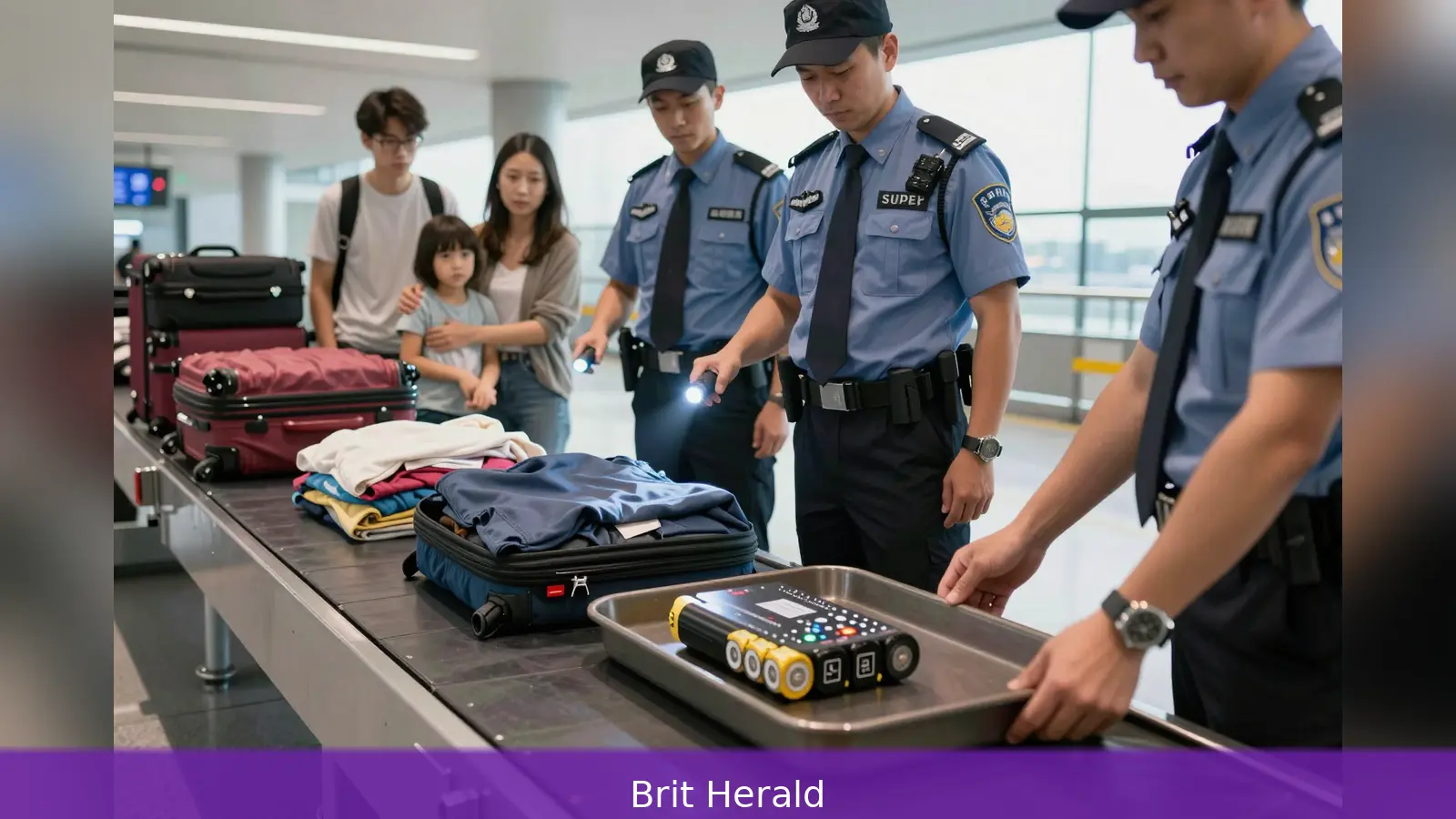
Passengers are bringing far more lithium-powered kit on holiday, yet many still place power banks and spare batteries in checked luggage. In 2025 airport security teams discovered 643 devices containing lithium batteries in hold baggage, nearly double the 316 found a year earlier, prompting fresh safety reminders as parts of the UK enter the school summer holidays. The Civil Aviation Authority says the average traveller now takes four different lithium-powered devices on a single flight and has elevated lithium-battery risk to its number one safety concern. Regulators warn that while most incidents happen in the cabin where crew can respond, a fire in the hold could go undetected until it's uncontrollable.
The CAA has been explicit about the trend and the risk. It recorded an increase in reports of devices overheating or malfunctioning in 2025 compared with 2024, and says the pattern shows a steady rise in lithium-battery incidents. Passengers remain the primary group at risk, but the operational fallout extends to airlines and airports through delays, diversions and baggage handling interventions.
What passengers must do
Rules are straightforward but not always followed. The regulator and airlines remind travellers that items such as mobile phones, vapes and power banks must be carried in the cabin rather than packed in checked baggage. Passengers are advised to check carrier rules on the number and capacity of power banks, and not to charge them onboard. Laptops placed in checked baggage should be turned off completely.
Some carriers have tightened guidance in recent months, reinforcing that spare batteries should not be placed in checked luggage and placing limits on capacity and quantity under the cabin-only rule. The CAA has issued guidance that several airlines use as a baseline.
Why cabin storage matters
Safety specialists say lithium batteries pack large amounts of energy and, when they fail, can trigger fires that are hard to extinguish. That is why crews can usually manage an incident in the cabin but a similar event in the hold risks becoming uncontrollable before it is discovered.

Airlines have recorded cases in both 2024 and 2025 that forced operational responses. Footage from previous events has been shared within the industry as a warning of what can happen when a battery fire is not visible to crew.
Industry trade bodies described the trend as a growing challenge and urged prevention through correct packing and awareness. Airlines say the sheer growth in everyday electronic devices travellers carry is increasing the hazard and that enforcement varies by carrier, so passenger behaviour remains the critical control point.
Practically, the consequences are felt at several points in the airport system. Handlers sometimes have to remove bags from the hold when a suspect device is discovered, disrupting turnaround schedules. Delays and diversions follow when crew or ground teams must inspect or isolate luggage.
The CAA figures make clear that while most overheating events occur in the cabin where a crew can act, the rising number of detections in hold baggage is what prompted the recent round of reminders.
Airlines are responding by policing cabin storage more strictly and adding explicit instructions about how and where to stow batteries and spare cells. Regulators and operators hope that clearer rules, combined with public reminders at the start of the summer holiday season, will reduce the number of dangerous items placed in checked luggage.
Related Articles
- DWP to use driving bans and bank seizures to recover £14.6bn
- 22% tax on cash in stocks and shares ISAs from 2027
- SpaceX slips below post-IPO close, wipes about $400bn off value
The rise in detections underlines a simple point: correct packing prevents a rare but high-consequence event. The CAA's figures have prompted renewed safety reminders ahead of the school summer holidays. Originally reported by BBC.
This article was created with AI assistance.


