
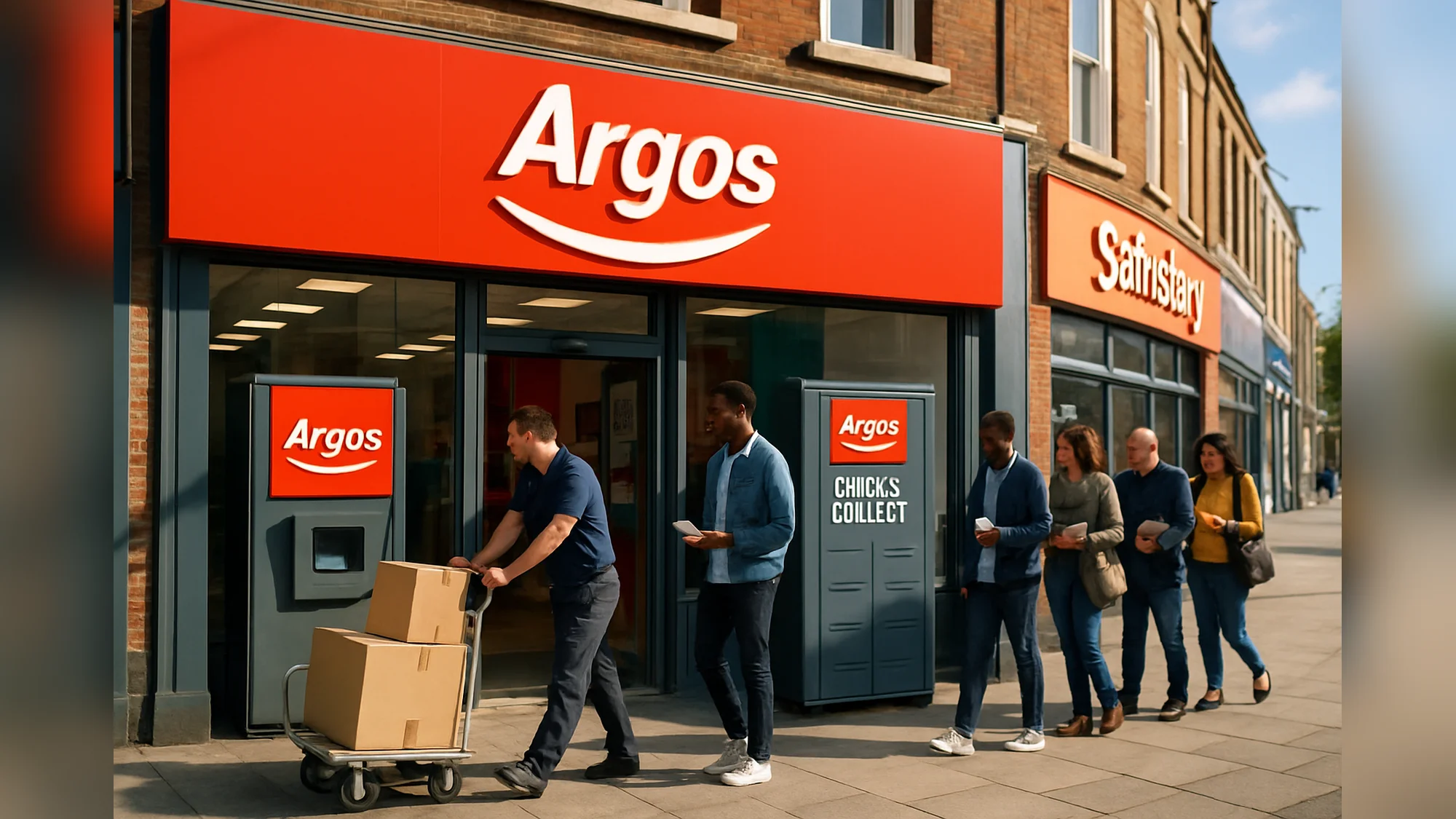
£120 million is the price Sainsbury's agreed on when it sold Argos on 31 July 2026, roughly one-tenth of the £1.4 billion it paid for the chain in 2016. The buyer is Swift Partners, a newly formed group that includes former Co-operative Group chief executive Richard Pennycook, with £70 million paid upfront and £50 million deferred over three years. Swift Partners plans to expand standalone shops and revamp fulfilment and in-store experience. This sale hands Sainsbury's room to refocus on food and gives the new owners a physical network they say they can use to reconnect Argos with half of UK households.
50% of UK households still use Argos, a reach that explains why the chain remains desirable despite the low headline price. Argos reported roughly £4.1 billion of sales in the most recent year and operates a large network of high-street stores, concessions inside Sainsbury's supermarkets and widespread collection points that allow same-day click-and-collect.
Why the price is so small
£120 million is a stark number against the £1.4 billion purchase a decade ago. The price reflects a steep shrinkage in corporate value under Sainsbury's ownership and a decade of shifting market expectations for general-merchandise retail. The deal structure, with most cash paid up front and £50 million deferred, leaves Sainsbury's to concentrate on groceries while giving Swift Partners time to implement operational changes before completion.
Swift Partners has pitched the acquisition as an opportunity to exploit Argos's physical footprint. The new owners say they will open standalone shops and refresh the customer proposition around faster fulfilment and improved in-store experience. That's a different tack from embedding Argos within Sainsbury's outlets, and it will demand upfront capital and a marketing push to "remind people" the brand exists, an analyst told the BBC.
Can stores beat the online giants?
£32 billion is the scale of Amazon's UK sales cited by the BBC, a gulf that underlines why a frontal fight online would be foolish. Industry commentators argue Argos's most credible pathway is a blended model that uses stores as fulfilment hubs, tightens customer service, improves mobile usability and repositions the brand to younger shoppers who currently see Argos as old fashioned.

The BBC's reporting captures the dilemma. Shoppers interviewed were split between nostalgia and practicality. Some described Argos as useful when they need an item immediately and value the in-store collection model. Others said they prefer one-click delivery and regard Argos as "old school." Retail analyst Catherine Shuttleworth told the BBC Argos could capitalise on its store network and British brand recognition, but it needs a stronger app to compete with Amazon, Shein and Temu.
Hugh Radojev, editor of Retail Week, told the BBC Argos has underperformed on customer experience and needs to feel more engaging to regain its former place in shoppers' minds.
There are operational fixes that could pay off quickly. Retailers close to Argos say app upgrades, clearer in-store merchandising and better frontline customer service training are inexpensive changes that could increase visit frequency among existing users. Longer-term work will demand tougher choices: reworking supplier terms, investing in omnichannel IT and altering the product mix to match fast-moving imported lines and value fashion.
Opening standalone stores reverses a decade of strategy. It also shifts the balance of risk back onto the buyer. Standalone shops will require capital and a tuned marketing push if they're to draw shoppers from pure-play online rivals. The new owners have a logistical advantage in their click-and-collect network, but converting that into renewed loyalty will be a test of execution rather than vision.
The deal also speaks to wider retail moods. It shows how the market now values reach and digital smoothness over a broad but shallow assortment delivered from stores.
For Swift Partners, Argos's scale and name recognition are assets. Turning them into growth, though, means faster fulfilment, a better app and a customer experience that feels contemporary to younger buyers.
Related Articles
- Sainsbury’s warns Middle East conflict could dent profits
- Undercover footage shows High Street mini‑marts selling drugs
- QVC Files for Bankruptcy to Cut $5bn Debt
The next concrete milestone is completion in early 2027, when Swift Partners will take operational control and begin rolling out store openings and the promised fulfilment upgrades. Whether a refreshed app, tidier stores and a louder marketing push can convert Argos's physical reach into renewed growth will be visible once the new owners start to spend the deferred £50 million and deploy capital into standalone shops. Originally reported by whoistheownerof.com.
This article was created with AI assistance.


