
A £500,000 fine was imposed on Kismet Kebabs after a court found the company supplied millions of doner kebabs labelled as lamb that were largely goat, skin and fat. Swansea Crown Court heard the Essex-based supplier, which sold kebabs to takeaways and restaurants across the UK, pleaded guilty to fraud and was ordered to pay a further £259,298 in costs. Trading standards sampling in late 2020 and early 2021 and subsequent DNA tests showed products marketed as high-percentage lamb sometimes contained less than 10 percent sheep in some samples, and one item labelled as 87 percent lamb was 51 percent meat and 40 percent fat. The prosecution followed referrals to the National Food Crime Unit and the Food Standards Agency.
The firm was fined and convicted after trading standards sampling and laboratory DNA tests found large discrepancies between the lamb content claimed on labels and the species actually present in the product.
What prosecutors said
Swansea Crown Court was told Kismet Kebabs Ltd, an Essex-based company that described itself as one of the UKs largest doner kebab makers, supplied product to wholesalers, retailers and foodservice customers nationwide. Prosecutor Lee Reynolds, speaking for Swansea Council, said the company had "misled wholesalers, retailers and consumers" by labelling products with a specific lamb content the firm knew to be incorrect. The judge said the company had engaged in "considerable dishonesty" over a prolonged period.
The company pleaded guilty to fraud. Court papers, including invoices and recipe cards entered as evidence, showed routine purchase and processing of goat, lamb fat, skin, mechanically recovered meat and other lower-grade material, which was then packaged under labels claiming between 50 and 90 percent lamb depending on the product. Swansea Council estimates the firm made about £6m from the activity. The court ordered a fine of £500,000 and costs of £259,298.
Kismet told the court the offences related to "historical events that occurred over five years ago" and to a period when it "operated under a different leadership structure". Defence submissions noted managerial changes and said remedial steps had been taken.

Lab tests and the factory raid
Trading standards sampling in late 2020 and early 2021 triggered the investigation.
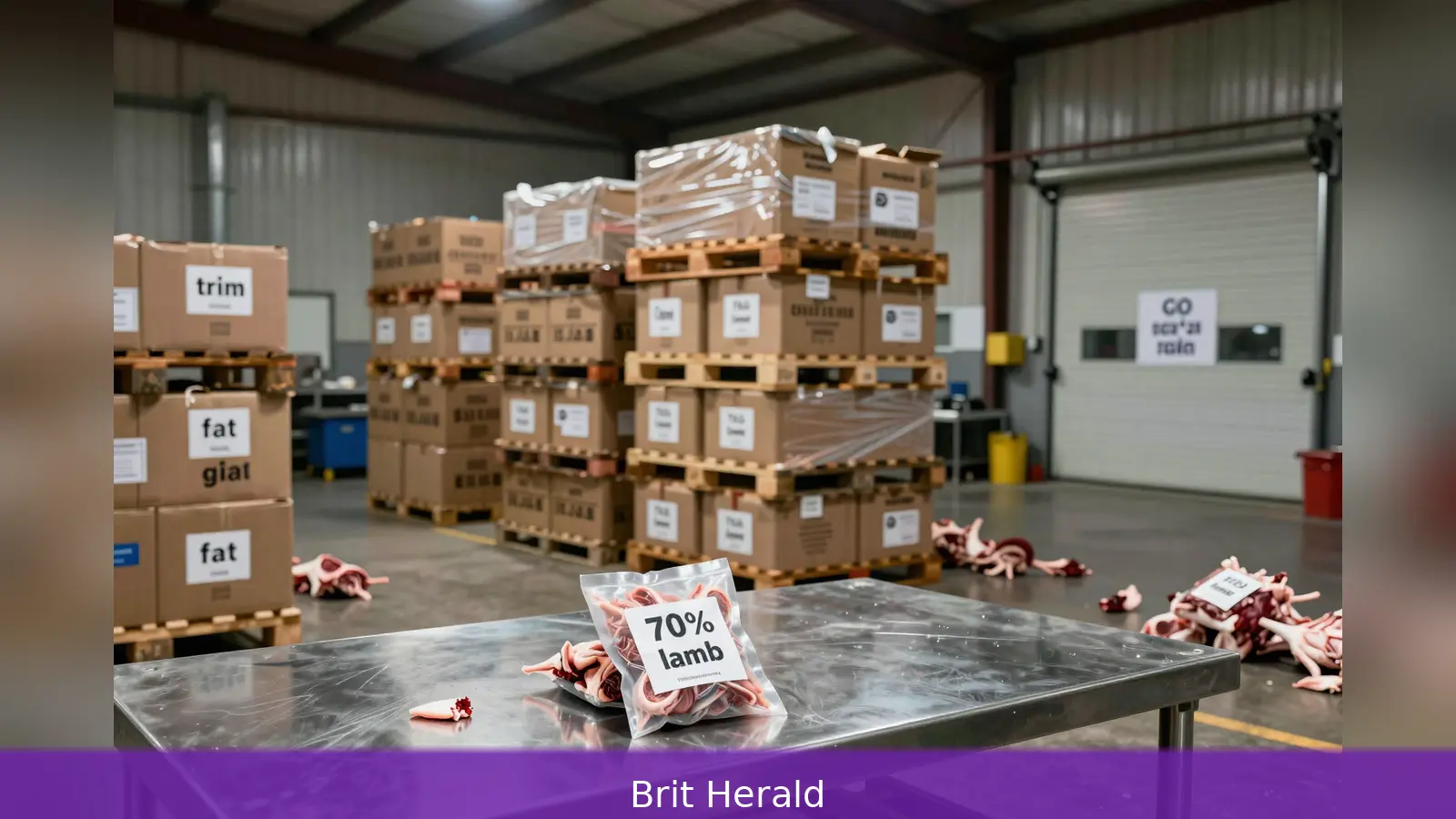
DNA tests on doner meat taken from kebab houses in Swansea returned results showing some products described as "70% lamb" contained "less than 10% sheep". That finding prompted a factory inspection and a raid on the firm’s premises in Latchingdon, near Chelmsford, on 20 May 2021.
Inspectors reported seeing little actual lamb on site. Swansea trading standards officer Rhys Harries said investigators found "pallets of goat, pallets of trim, offcuts with high fat content, boxes of fat, boxes of skin, bits of mutton." He added, "We didn't see any lamb apart from lamb fat." The contrast between the labels and what was on the factory floor formed a key plank of the prosecution.
The court heard an example where a product labelled as containing 87 percent lamb was analysed and found to be 51 percent meat and 40 percent fat. Prosecuting counsel warned the case raised not only consumer deception issues but also potential public health and legal concerns arising from labelling products with incorrect species and meat content.
Following additional testing and inquiries across local authorities, Swansea Council referred the matter to the National Food Crime Unit and the Food Standards Agency.
The case has been likened by trading standards officers to the 2013 horsemeat scandal because of the scale of mislabelling and the volume of processed product sold into the market. That comparison underlined how large-scale inaccuracies in processed meat supply chains can reach large parts of the retail and foodservice sectors before detection.
The court fined Kismet £500,000 and ordered £259,298 in costs, in a case trading standards likened to the 2013 horsemeat scandal.
This article was created with AI assistance.


