
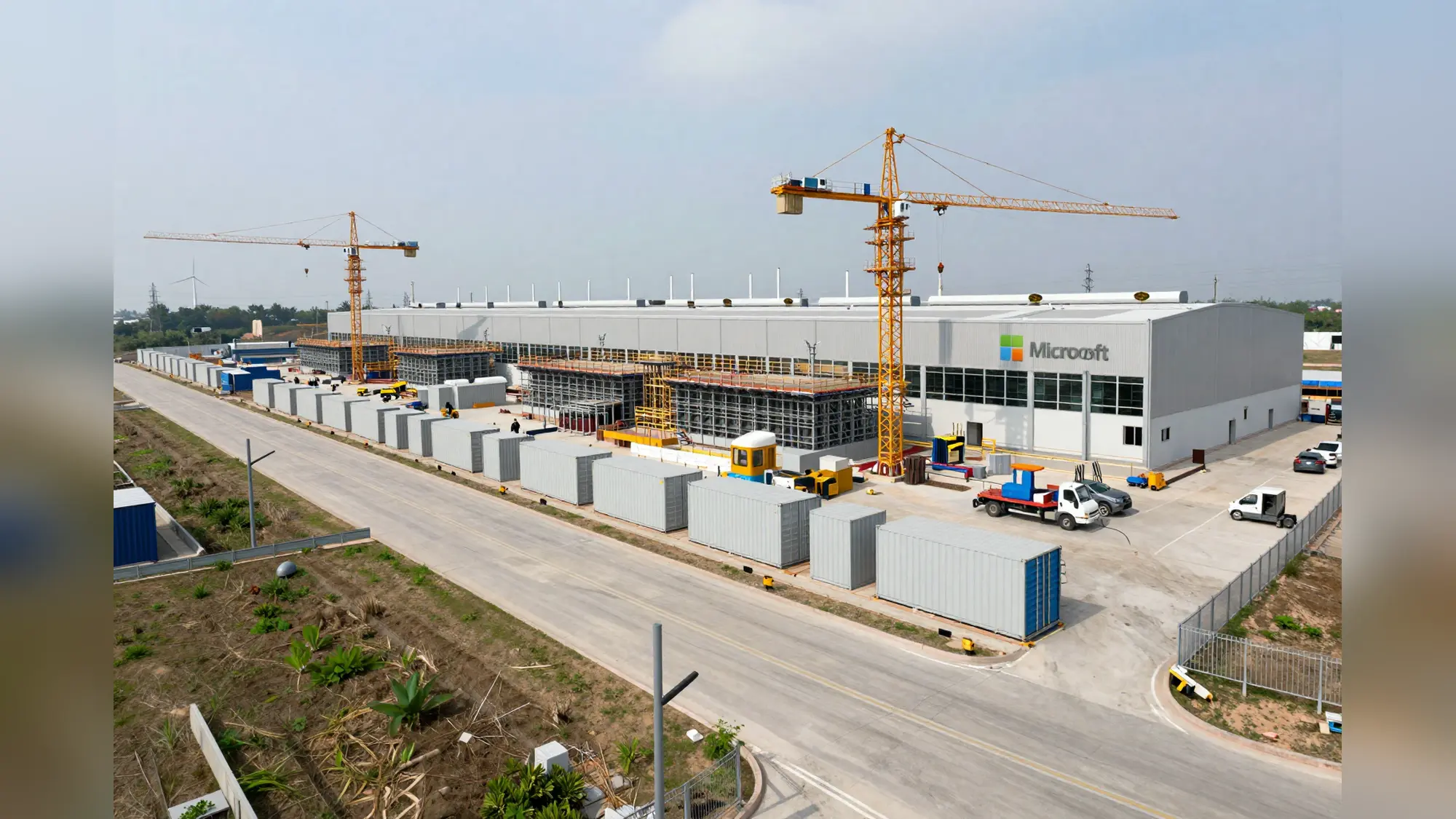
"While AI infrastructure is driving demand for energy, water, land, and materials, sustainability solutions aren't scaling fast enough to meet demand," Microsoft President Brad Smith and Chief Sustainability Officer Melanie Nakagawa wrote, as the company disclosed its reported carbon emissions rose 25% in 2025 to 20 million metric tonnes of carbon dioxide equivalent, up from 16 million metric tonnes in 2024. The 2026 sustainability report said the jump was driven mainly by rapid expansion of AI-focused data centres and a pause in purchases of certain renewable energy credits. Microsoft tied higher electricity, water and material use to new data centre construction and to greater operational demand from AI workloads. The company repeated its 2020 pledge to be carbon negative by 2030 and said it remained committed to that goal.
"While AI infrastructure is driving demand for energy, water, land, and materials, sustainability solutions aren't scaling fast enough to meet demand," Microsoft President Brad Smith and Chief Sustainability Officer Melanie Nakagawa wrote in the company’s 2026 sustainability report. That stark line frames a practical problem: Microsoft reported a 25% rise in greenhouse gas emissions for 2025, from 16 million metric tonnes in 2024 to 20 million metric tonnes.
The company attributes the increase primarily to two factors. First, a rapid expansion of AI-focused data centre capacity has raised electricity consumption, water use for cooling and the materials required for construction and operation. Second, Microsoft says a decision last February to pause purchases of particular renewable energy certificates, described in its filings as non-additional and unbundled, affected its reported totals.
Executives describe the figures as the product of a tension between commercial AI demand and the pace at which sustainable solutions can be deployed. The report says investments in AI infrastructure have outpaced the roll-out of matching clean-energy projects and water-saving systems, prompting a reassessment of earlier approaches such as certain carbon-banking deals and an hourly matching target that would pair data centre electricity use with renewable generation in real time.
Microsoft has been explicit that not all new power deals are with zero-carbon sources. The report and subsequent coverage point to contracts that in some markets rely on fossil-fuel generation, including an agreement to take power from a natural-gas-fired plant in West Texas to supply a new Microsoft data centre complex.

That choice illustrates the trade-offs operators face when they need stable, immediate supply to serve large-scale AI facilities.
The company isn't alone. Alphabet’s latest report showed its total emissions rose about 25% year-on-year, and Amazon disclosed a 16% increase in global greenhouse gas emissions for 2025. Industry reporting and company statements link these rises across the cloud sector to a common set of activities: construction of new data centres, greater electricity consumption for model training and inference, and higher water use for cooling systems.
The International Energy Agency is cited in coverage of the sector because it projects that electricity-related emissions from data centres could rise sharply this decade. Put plainly, the scale of the infrastructure buildout looks likely to test how quickly grids and clean-energy projects can expand to meet an added load that's concentrated in particular regions and over short time frames.
For Microsoft the disclosure forces an operational and reputational reckoning. The company has reiterated the 2020 commitment to be carbon negative by 2030, yet the report admits sustainability measures built to date aren't scaling fast enough to match AI's rising energy and water needs. The company says it's reassessing some offsetting and matching approaches used in prior years, a shift that will change how future emissions are reported and, potentially, how supply deals are structured.
That matters for investors and policy makers alike. The direction of tech-sector emissions will depend on whether clean-energy projects can be delivered at the pace and in the locations where hyperscale compute is concentrated. It will also depend on corporate accounting choices such as the purchase of renewable energy certificates and the use of carbon-banking mechanisms, both of which Microsoft has said it will re-evaluate.
Microsoft's figures offer a blunt reminder that earlier gains in emissions intensity can be partially reversed when demand for new infrastructure accelerates. The company frames the 25% increase as both a consequence of business momentum in AI and a prompt to change the mechanisms it has relied on to claim progress against its longer-term climate commitments.
Related Articles
- Murata Q3 sales up 4.3% as operating profit halves
- ABB raises 2026 sales outlook after surge in data-centre and AI orders
- Tesla hikes 2026 capex to $25bn
Investors and policymakers will look to Microsoft’s next annual report to judge whether its revised accounting and new clean-energy contracts have narrowed the gap between AI demand and sustainability delivery.
This article was created with AI assistance.


