
4.3%. China’s economy expanded by 4.3% year-on-year in the second quarter, slowing from a 5.0% rise in Q1 and missing Beijing’s already lowered annual goal. The National Bureau of Statistics said the April to June result reflected weak domestic demand alongside rising external uncertainty. That mix makes the gap between strong export performance and a fragile home market the defining feature of the quarter.
The National Bureau of Statistics released the Q2 number with a pointed diagnosis: more external instability and uncertainty, and an imbalance between strong supply and weak domestic demand. The outcome is the weakest quarterly expansion since China emerged from Covid-19 restrictions at the end of 2022 and comes after Beijing set a 2026 target of 4.5% to 5% in March, the lowest official goal since 1991.
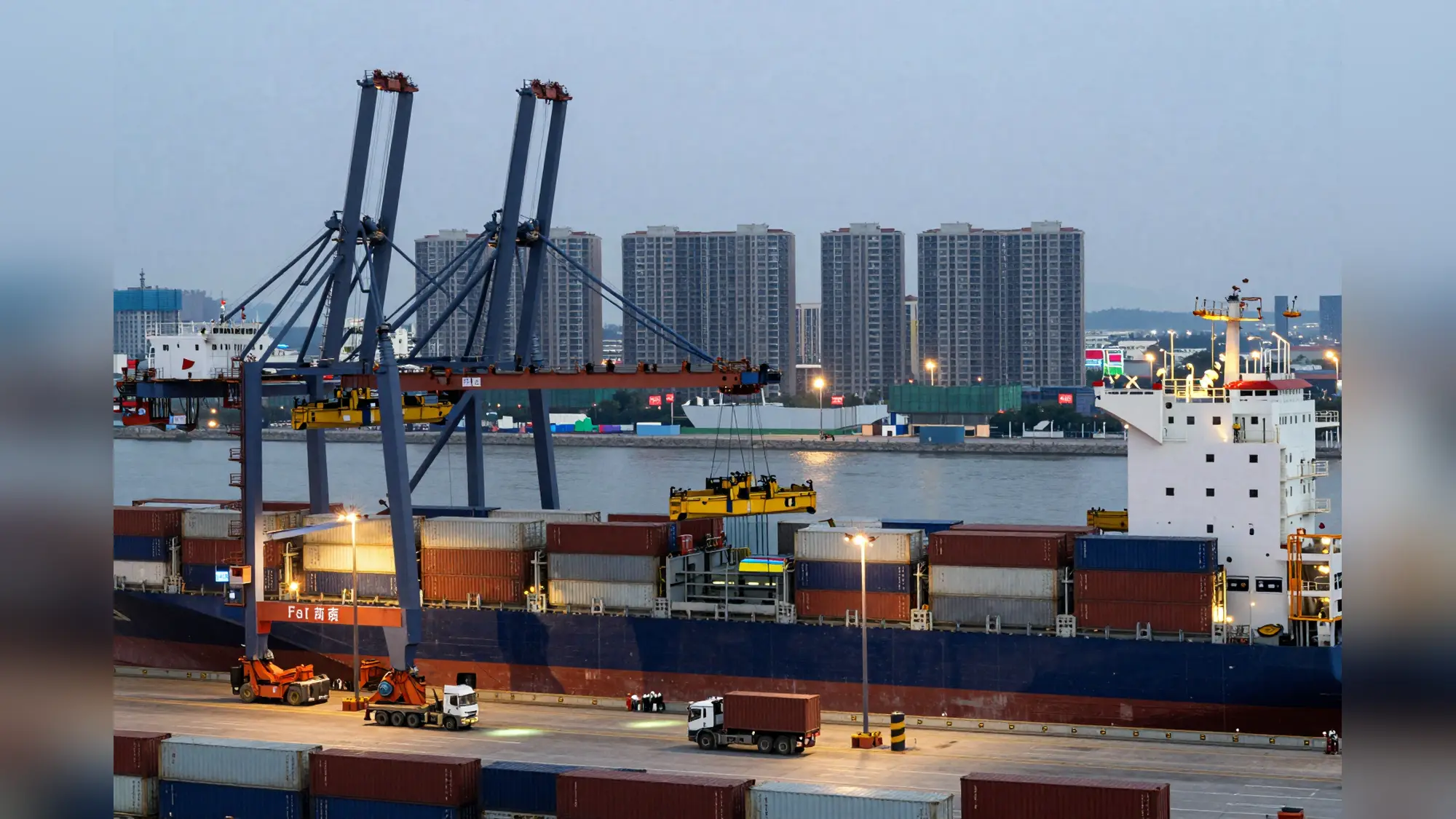
The headline masks sharp divergences inside the economy. Customs data published alongside the national accounts showed exports jumped 27% in June year-on-year, driven by surging global demand for semiconductors and robust sales of electric vehicles. The customs bulletin also recorded monthly car exports topping one million for the first time, underscoring how technology and auto manufacturing have become an external stabiliser even as other sectors cool.
Households and the property sector remain the most visibly weak spots. Retail sales in June rose a modest 1.0% after a 0.6% decline in May, leaving consumer spending fragile relative to pre-pandemic trends.
New home prices contracted again in June, down 0.1%, extending a multi-year slump in real estate that's still weighing on investment and employment in construction and industries linked to housing demand.
Businesses are being squeezed from both ends. The statistics office and other releases point to a combination of external shocks, including higher oil prices related to the Iran war, and softer final demand at home. Fabien Yip, market analyst at investment platform IG, told the BBC that Chinese companies are absorbing higher energy and raw material costs "because demand at the till is too weak to bear it." That sums up why firms are reluctant to pass costs on or to expand payrolls.
Policy options are limited by the arithmetic. Officials cut the annual growth target in March to the 4.5% to 5% range precisely to give themselves room to respond. But missing the lower end of that band so early in the year increases pressure for measures to shore up consumption and the property market, even as strong external demand for chips and EVs provides a partial offset by keeping factories busy.
For now the latest package of releases combined GDP, trade and sectoral indicators for the April to June quarter and for June itself; there's no separate scheduled data drop tied to the Q2 figures. That leaves policymakers to weigh how much fiscal and monetary weight to put behind attempts to revive household spending without overstimulating already-strong export-linked production.
Related Articles
- China's $107bn hedging surge as yuan squeezes exporters
- China profit outlook to improve as AI market heads to $67bn
- China copper trade hit: over half of spot volumes disrupted
Set in March at 4.5% to 5%, Beijing's 2026 growth target is now under strain after the 4.3% Q2 print, increasing pressure on policymakers to consider fiscal or monetary steps to revive consumption and stabilise the property market.
This article was created with AI assistance.



