
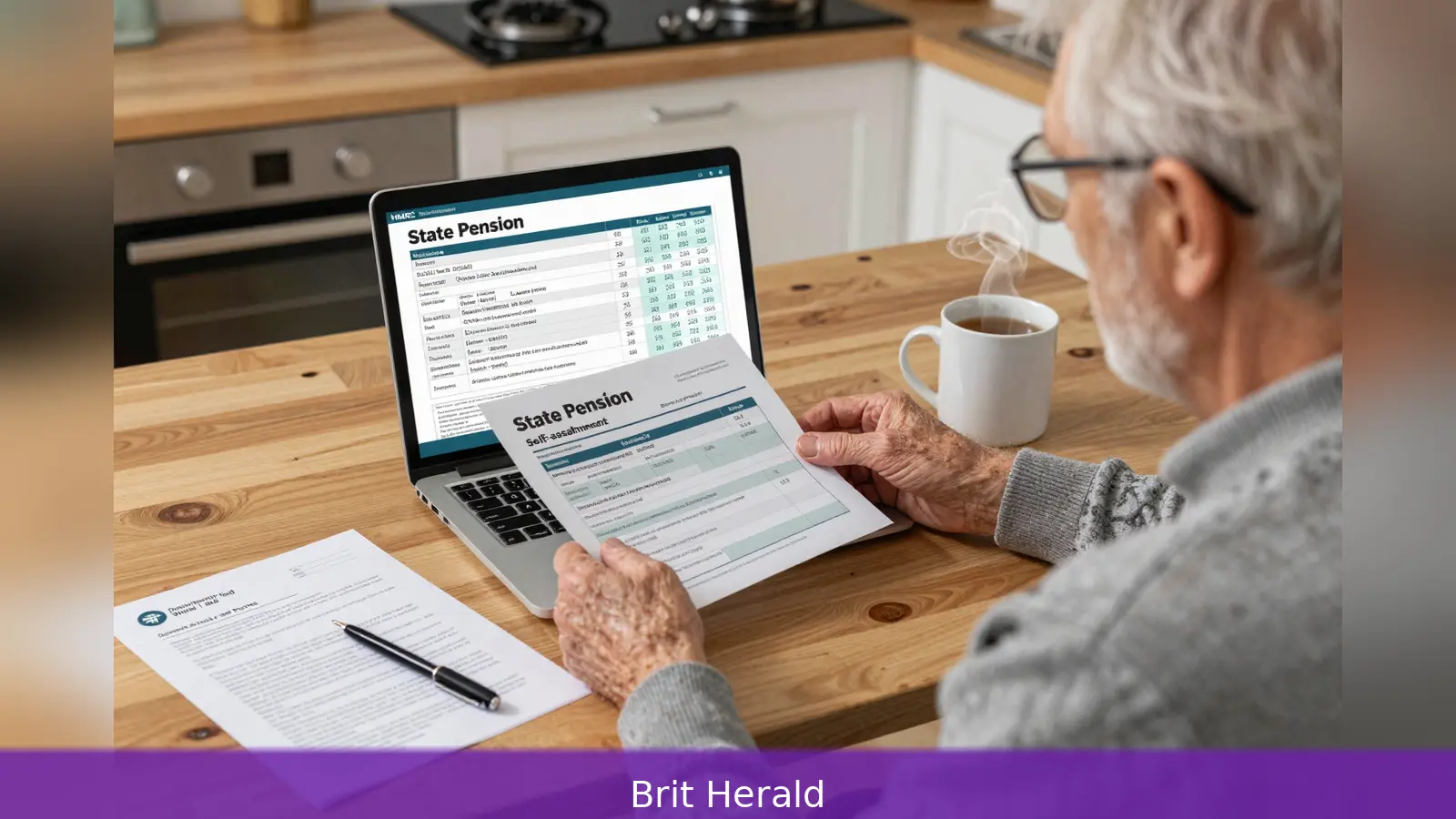
About 1.7 million state pensioners who used HMRC's self-assessment had their state pension pre-filled at the full new weekly rate for all 52 weeks, overstating income and nudging tax bills by about £5 in most cases. The error arose because HMRC's system used the Department for Work and Pensions' 52-week figure rather than HMRC's reporting rule, which counts one week at the previous year's rate and 51 weeks at the current rate. "We apologise to those affected by this calculation error and are working to fix the issue, although the impact is small with the difference in tax owed being around £5 in most cases," an HM Revenue and Customs spokesman said. HMRC says it expects to resolve the problem this summer and will issue further updates to affected customers and tax agents.
How the error arose
HM Revenue and Customs has acknowledged a software fault in its self-assessment system that led pre-filled returns to use the Department for Work and Pensions' 52-week figure instead of HMRC's own reporting rule, which reflects how entitlement builds across the tax year. The correct approach, HMRC says, is to count one week at the previous year's rate and 51 weeks at the current rate; the system instead used the full 52 weeks at the higher new rate.
That matters because the full new state pension for 2025-26 rose from £221.20 a week to £230.25 a week, making the pre-filled figure overstated by £9.05. HMRC characterised the typical individual overpayment as small, at about £5 per person, and apologised to those affected. The 1.7 million figure relates specifically to pensioners whose returns were pre-populated in the self-assessment tool.
Accountancy firm Grant Thornton identified the error and brought it to HMRC's attention. HMRC told MPs and campaigners that it has been working on a correction since early autumn and expects to clear the issue this summer, with further information to follow for pensioners and tax agents as the fix is rolled out.
Independent reporting has suggested the problem could be wider than the self-assessment cohort. The Sunday Times estimated that as many as 8.7 million income-tax-paying pensioners could have been affected and that HMRC may have collected up to £43.5 million extra in the last year as a result.

HMRC hasn't confirmed an overall total for those taxed through PAYE.
The pre-fill fault can affect pensioners whose state pension is taxed through PAYE as well as those using self-assessment, because the DWP-supplied figures used a flat 52-week basis, contrary to HMRC's split-week guidance. Critics, including former pensions ministers, described the mistake as careless and asked why the inconsistency between departments had persisted.
The timeline of internal awareness has also drawn scrutiny, with critics pressing for explanations of when and how the mistake was discovered and escalated.
HMRC says the practical impact for most individuals is small but accepts the principle that pensioners were taxed using the wrong figures. It has told taxpayers that there's no automatic mass refund. Affected taxpayers must spot and correct the pre-filled figure on their tax return to reclaim any overpaid tax, and pensioners who believe they have been overcharged can contact HMRC to arrange repayments.
The department's spokesman reiterated that the authority is working to correct the calculation and will update affected customers when the correction is implemented. For now the advice to pensioners is to check pre-filled returns carefully and to speak to their tax agents or HMRC if they think they have paid too much.
Related Articles
- 8.7m pensioners overcharged by about £5 each, HMRC apologises
- HMRC advisory fuel rates rise from 1 June 2026
- Brexit cut 6% of UK GDP, wider studies point to 8%
HMRC expects to clear the issue this summer and will provide further information to pensioners and tax agents as the technical fix is rolled out. Originally reported by ibtimes.co.uk.
This article was created with AI assistance.


